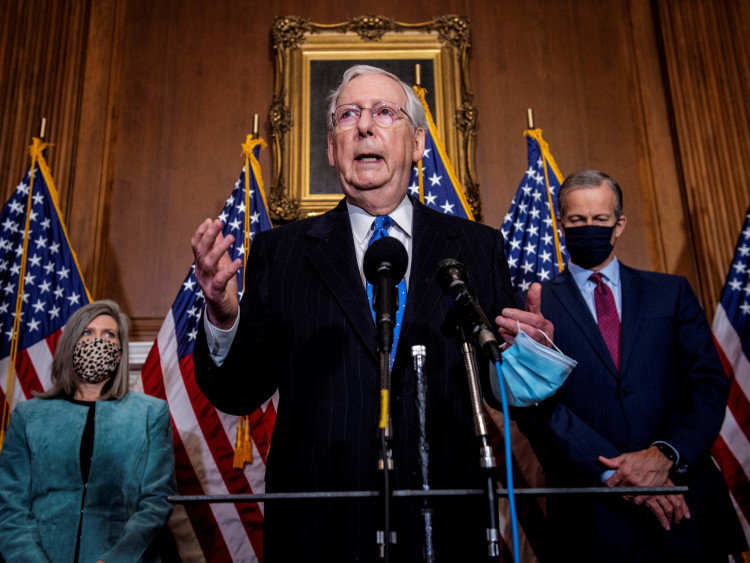
Kentucky Gov. Andy Beshear said he received calls from two unnamed non-state agencies indicating that Sen. Mitch McConnell had died during his recent hospitalization, adding a dramatic new element to questions surrounding the longtime Republican leader's health while emphasizing that he could not independently verify the information.
Beshear made the remarks during an interview with journalist Katie Couric published on July 15, using the episode to argue that McConnell owes Kentucky voters a direct update about his condition and ability to continue serving in the Senate. The governor did not identify the agencies involved, explain when the calls occurred or provide evidence supporting the claims, and his comments do not constitute confirmation that McConnell died or that any government authority officially believed he had.
The controversy follows weeks of limited public information about McConnell after his office announced he had been hospitalized following a fall. The senator later said he briefly lost consciousness, developed mild pneumonia and denied reports that he had suffered either a heart attack or a stroke. His office also released a written statement and a photograph showing McConnell in a hospital bed alongside his wife, former Transportation Secretary Elaine Chao.
During the interview, Beshear said the absence of frequent public updates fueled widespread speculation about McConnell's condition.
"In fact, I'd gotten two calls from different agencies, not state agencies, suggesting he'd passed," Beshear told Couric.
The Democratic governor stressed that his concern centered less on rumors than on whether a sitting U.S. senator remains capable of fulfilling the responsibilities of elected office.
According to Beshear, McConnell's "boss" is the people of Kentucky, who deserve to know whether their senator is able to continue representing them in Washington. He argued that uncertainty surrounding the senator's health has become a matter of public accountability because it directly affects representation in the Senate.
At the same time, Beshear acknowledged the limits of his own knowledge regarding McConnell's condition.
"I don't have any way of knowing anything more than anyone else," he said when asked whether he believed the hospital photograph or official statement resolved the questions surrounding the senator's health.
Beshear added that McConnell's statement "does sound like Senator McConnell," but maintained that a written statement alone does not answer whether the senator is physically capable of completing his duties.
The governor also said his office formally contacted McConnell's office seeking additional information but had not received a response.
Rather than requesting detailed medical records, Beshear suggested that a brief public appearance could significantly reduce speculation.
"All it is is being honest and transparent with the people of Kentucky," he said.
McConnell has publicly stated that he intends to complete the Senate term to which he was elected. In his statement released after the hospitalization, he said his planned retirement at the end of the current term reflected the demands of Senate service rather than an immediate inability to perform his duties, adding that he still had unfinished work to complete.
Beshear questioned whether that assurance was sufficient without a direct public demonstration that McConnell remains able to serve.
"He needs to show us that he can," the governor said.