OpenAI has confidentially submitted draft paperwork for an initial public offering, positioning itself for a potential stock-market debut as competition intensifies across the artificial intelligence industry and rival Anthropic races to capitalize on surging investor demand.
The ChatGPT maker announced the filing this week but stressed that no timeline has been set for a public listing. The move nevertheless marks a significant milestone for one of the most closely watched companies in the technology sector, whose products have helped ignite the global AI boom.
"It may be a while because there are things we want to do that are likely easier as a private company," OpenAI said in a statement. The company added that the filing provides strategic flexibility while the Securities and Exchange Commission reviews the submission.
"This gives us the option to go public after the SEC completes its review," the company said. "The number of shares to be offered and the price have not yet been set."
While OpenAI publicly emphasized patience, Bloomberg reported that a market debut could occur as early as this fall. Such a move would place the company at the center of one of the largest technology listings in recent years and provide investors with a direct opportunity to participate in the rapidly expanding artificial-intelligence sector.
The IPO filing arrives amid growing scrutiny of OpenAI's financial performance and corporate governance. Axios cited a Wall Street Journal report detailing missed internal revenue targets and reported disagreements between Chief Executive Sam Altman and Chief Financial Officer Sarah Friar regarding the timing of a public offering.
At the same time, OpenAI is reportedly engaged in discussions with the Trump administration over an unconventional proposal that could give the federal government an ownership stake in the company.
According to CNBC, discussions have been underway for more than a year after Altman first raised the concept with President Donald Trump in 2025. One proposal under consideration would involve OpenAI contributing equity to seed a so-called Public Wealth Fund.
A person familiar with the matter told CNBC that the fund could "invest in diversified, long-term assets," allowing Americans to participate in the economic gains generated by artificial intelligence. Under some scenarios, citizens could receive direct financial benefits tied to the fund's performance.
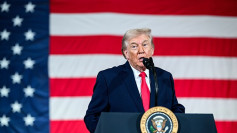
Trump acknowledged the concept last week, saying, "there are concepts where pieces could be given to the American public, where the American public essentially becomes a partner."
The filing comes as OpenAI faces mounting competitive pressure from Anthropic, another leading AI developer that has already filed for its own public offering. Industry analysts view the timing as critical because both companies are expected to seek billions of dollars in fresh capital from public investors within a relatively short period.
NBC News reported that reaching public markets before competitors could provide a significant advantage in attracting institutional investment and strengthening market positioning.
Anthropic's recent fundraising success has intensified the rivalry. Days before OpenAI's announcement, Anthropic completed a massive Series H funding round that valued the company at $965 billion, according to Axios, making it the world's most valuable artificial-intelligence startup.
The financing round was led by Altimeter Capital, Dragoneer, Greenoaks and Sequoia Capital and raised $65 billion in new funding. Anthropic said the capital would be used to expand computing infrastructure, scale deployment of its Claude AI platform and continue research focused on AI safety and interpretability.
Anthropic Chief Financial Officer Krishna Rao said in a company statement that the funding would help the company meet accelerating customer demand while maintaining its research priorities.