India has launched a diplomatic protest against the United States after three Indian seafarers were killed in a U.S. military strike on the M/T Settebello in the Sea of Oman, a development that has intensified pressure on Prime Minister Narendra Modi's government just days before a planned meeting with President Donald Trump at the G7 summit.
The incident marks the first confirmed deaths of Indian nationals during the U.S.-led campaign targeting vessels accused of transporting Iranian oil. New Delhi has demanded explanations from Washington while labor unions, opposition parties and families of the victims call for accountability over an attack that has exposed the growing risks faced by Indian merchant sailors operating in one of the world's most volatile maritime corridors.
According to U.S. officials, the Palau-flagged M/T Settebello was struck after allegedly failing to comply with instructions issued by American forces enforcing restrictions on Iranian oil shipments. The strike triggered a major fire aboard the vessel, killing three crew members and transforming a military operation into a diplomatic challenge between two strategic partners.
India's Ministry of External Affairs responded swiftly. Foreign ministry spokesperson Randhir Jaiswal said that "the attacks that are happening must stop" after New Delhi summoned Washington's Chargé d'Affaires to seek clarification over the incident.
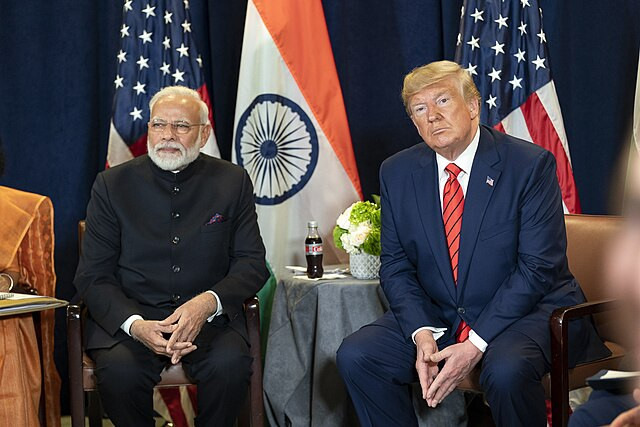
The timing has heightened the political sensitivity of the case. Modi and Trump are expected to meet during next week's G7 gathering, where security cooperation, trade and regional stability are likely to dominate discussions. The deaths now add a new point of friction to a relationship that has already faced strain from disagreements over trade policy, regional diplomacy and Washington's evolving ties with Pakistan.
The Settebello was carrying a crew of 28 sailors, most of them Indian nationals. The attack also followed a series of similar incidents involving ships with Indian crews.
According to reports:
- M/T Marivex, carrying 24 Indian sailors, required rescue operations after being struck in the Gulf of Oman one day earlier.
- M/T Jalveer, a Guinea-Bissau-flagged tanker transporting Iranian oil, was also targeted on Thursday.
- Indian crew members aboard the Jalveer were reported safe.
The succession of attacks has fueled concern among India's maritime sector, which supplies hundreds of thousands of seafarers to global shipping companies.
Manoj Yadav, general secretary of the Forward Seamen's Union, said the strikes have created "panic and fear" among Indian sailors working in high-risk regions. He questioned the use of force against commercial vessels and argued that authorities could have intercepted or detained ships rather than launching attacks that endangered civilian crews.
For the families of those killed, the geopolitical debate is secondary to personal loss. Rajesh Sharma, whose son died aboard the Settebello, has called for his son's remains to be returned home and asked for a full account of what occurred during the attack.
Another victim's father, Ramji Chaurasiya, recalled speaking with his son shortly before the strike. "He said everything was alright," Chaurasiya told ANI before becoming emotional during the interview.
Political pressure is also building within India. Opposition figures have argued that the incident represents a test of Modi's relationship with Washington, questioning whether close ties with Trump have translated into sufficient protection for Indian citizens working abroad.
Analysts say the deaths could become a significant issue in bilateral discussions. Political scientist Kanti Bajpai described the episode as "an irritant in a wobbling relationship," reflecting broader concerns about how regional conflicts are increasingly affecting Indian nationals employed across international shipping routes.