President Donald Trump's newly announced peace agreement with Iran received swift endorsements from leaders across Europe and the Middle East on Monday, as governments prepared for a formal signing ceremony in Switzerland and urged both sides to turn the breakthrough into lasting regional stability.
The memorandum of understanding, which Trump said would formally end hostilities and pave the way for future negotiations, has drawn support from key international players including Qatar, Türkiye, the United Kingdom, Germany and France. Many leaders focused on the agreement's potential to reopen the Strait of Hormuz, restore disrupted shipping routes and ease economic pressures that intensified during months of conflict.
The diplomatic initiative has also elevated the role of regional mediators, particularly Pakistan and Qatar, which were credited by multiple governments for helping facilitate negotiations between Washington and Tehran. While optimism has grown around the agreement, officials emphasized that implementation will be critical to determining whether the deal delivers meaningful security gains.
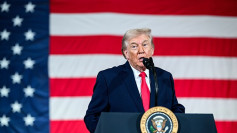
Trump announced the agreement's completion in a social media post, declaring: "The Deal with the Islamic Republic of Iran is now complete. Congratulations to all!"
He added: "Ships of the World, start your engines. Let the oil flow!"
The announcement immediately triggered reactions from governments that have closely monitored tensions surrounding Iran, Israel and maritime traffic through the Persian Gulf.
Qatar Prime Minister Sheikh Mohammed bin Abdulrahman bin Jassim Al Thani welcomed the accord and praised the diplomatic efforts behind it. "We welcome the agreement reached on the Memorandum of Understanding between the United States of America and the Islamic Republic of Iran," he said.
Qatar's Foreign Ministry issued a separate statement describing the agreement as "an important step towards consolidating sustainable peace and promoting economic growth regionally and internationally."
Turkish President Recep Tayyip Erdogan also endorsed the development, framing it as a rare opportunity to reduce instability across the region.
"It is an important development for establishing peace and tranquillity in our region," Erdogan said.
He further expressed hope that the agreement would create broader security benefits, stating: "I sincerely hope that this news, which the entire world has long needed, will pave the way for the establishment of a lasting environment of peace and security in our region."
Erdogan also warned against actions that could derail the process and thanked Pakistan, Qatar and Saudi Arabia for their diplomatic contributions. Turkish officials indicated that mediators would participate in follow-up meetings aimed at preparing technical aspects of implementation before the agreement takes effect.
European leaders largely echoed that message while stressing that the accord must be translated into concrete actions.
British Prime Minister Keir Starmer described the deal as "a hugely important step forward in ending the war, ensuring regional stability and re-opening the Strait of Hormuz."
Starmer added: "I congratulate President Trump and the mediators from Pakistan, Qatar, and elsewhere who have contributed to this breakthrough."
The British leader reiterated London's position that Iran should never obtain nuclear weapons and said the United Kingdom was prepared to assist with maritime security operations and technical discussions related to implementation.
German Chancellor Friedrich Merz highlighted the broader economic implications of the agreement.
"I welcome the agreement between the U.S. and Iran and congratulate President Trump and the Iranian side on this diplomatic breakthrough. This can pave the way towards a reinvigorated global economy and a more secure Middle East," Merz said.
French President Emmanuel Macron focused heavily on the importance of restoring unrestricted navigation through one of the world's most important energy corridors.
"This agreement must enable the urgent and unconditional reopening of the Strait of Hormuz," Macron said.
Macron added that France and Britain stood ready to support international efforts to restore commercial shipping and argued that the agreement should provide momentum for future discussions involving Iran's nuclear program, ballistic missile activities and wider regional security concerns.