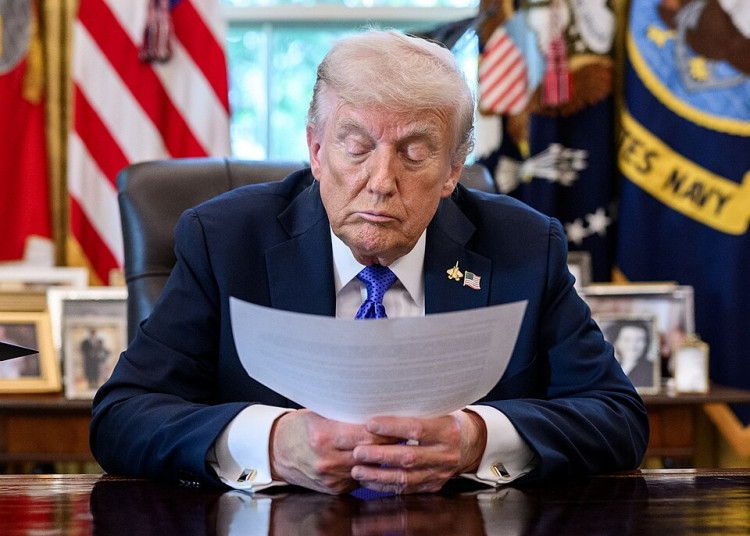
President Donald Trump signed a memorandum of understanding with Iran on Wednesday, formally launching a ceasefire framework and a new round of nuclear negotiations aimed at ending months of conflict that disrupted global energy markets and raised fears of a broader regional war.
The signing took place in Versailles on the sidelines of the G7 summit, where Trump met with world leaders before approving the agreement. The document establishes a pathway for further negotiations over Iran's nuclear program while seeking to restore stability to global oil markets through the reopening of the Strait of Hormuz.
White House Chief of Staff Susie Wiles highlighted the significance of the agreement in a social media post following the signing ceremony.
President Donald J. Trump signs the Iran Memorandum of Understanding.
Peace through strength. pic.twitter.com/ZbdnxIkRT5 — The White House (@WhiteHouse) June 18, 2026
"Not America Only, America First. The trip was capped off with a beautiful dinner and birthday celebration for President Trump at Versailles. This was truly spectacular - particularly after his blistering schedule of bilateral and other meetings and working sessions. Nobody works harder," Wiles wrote.
She added: "President Trump signed the MOU with Iranians while he was at dinner. While the next 60 days will present challenges as important details are worked out, signing was a great step forward for America and, indeed, the world."
According to Axios, one of the administration's primary motivations for accelerating the agreement was the urgent need to reopen the Strait of Hormuz, a strategic shipping route that carries a significant share of the world's oil exports. Prolonged disruptions in the waterway had fueled concerns about supply shortages and sharply higher energy prices.
Trump emphasized those concerns when discussing the agreement, arguing that restoring oil flows had become a pressing economic priority.
"There are reserves all over the world, and we would really run out, and there'll be a time when you wouldn't be able to get it," Trump said. He added that such a scenario would have been "bedlam."
The conflict's impact on energy markets has already prompted reassessments by major international institutions. The International Energy Agency said in its latest Oil Market Report that global oil demand growth has weakened considerably compared with projections issued earlier this year.
The Paris-based agency cited higher crude prices and transportation disruptions as key factors weighing on fuel consumption, particularly in industrial and transportation sectors. The uncertainty surrounding Middle East energy supplies had become a major concern for policymakers and investors alike.
Despite the weaker demand outlook, the IEA said global supply growth remains relatively strong and could eventually outpace consumption once geopolitical tensions ease. That dynamic could create significant downward pressure on prices if production expands as expected.
According to the agency's latest forecast:
- Global oil supply could increase by approximately 8 million barrels per day in 2027.
- Global demand is expected to grow by roughly 2 million barrels per day.
- The imbalance could produce one of the largest oil surpluses in recent years.