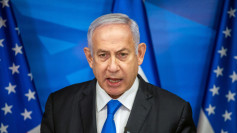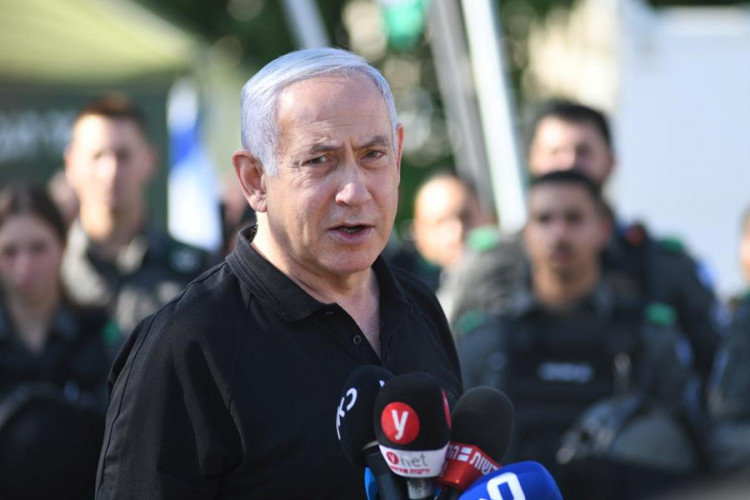
Israeli Prime Minister Benjamin Netanyahu said Thursday that Israeli forces will remain in southern Lebanon for the foreseeable future, signaling a potential flashpoint as the U.S.-Iran memorandum aimed at ending regional hostilities faces growing scrutiny over its implications for Lebanon.
Speaking during a public ceremony, Netanyahu tied Israel's military presence directly to the security of communities along the northern border, where tens of thousands of residents have been displaced by months of fighting with Hezbollah.
"Restoring security and prosperity to northern towns" requires "maintaining the security zone in southern Lebanon; it requires that we not leave there, as long as Israel's security needs require it," Netanyahu said.
The remarks came as questions mounted over how the recently signed U.S.-Iran memorandum will be implemented across the region. According to officials involved in the negotiations, the agreement seeks to halt hostilities on multiple fronts, including Lebanon, where clashes between Israel and the Iran-backed Hezbollah movement have fueled broader regional instability.
A senior Israeli official told Reuters that Israel is "conducting stubborn negotiations" regarding the Lebanese component of the arrangement. The official's comments underscore the gap between the expectations of Tehran and the position being articulated by Jerusalem.
Iranian officials have argued that Israeli forces should withdraw from Lebanese territory under the broader framework established by the agreement with Washington. However, neither Israel nor Lebanon is a signatory to the memorandum, leaving key enforcement and implementation questions unresolved.
Israel's military appeared to reinforce Netanyahu's position. The Israel Defense Forces released an updated map of its security zone in southern Lebanon, indicating that troops would remain deployed in the area rather than preparing for an immediate withdrawal.
The dispute has also exposed growing differences between Israeli officials and some members of the Trump administration. Vice President JD Vance delivered unusually blunt criticism of Israeli concerns about the agreement during an interview with The New York Times.
"I find this whole freakout in Israel a little bit odd because I think that it comes from a place of mistrust, and I think that America has earned the trust of that region of the world," Vance said.
The vice president defended the administration's diplomatic approach, arguing that Washington's record in the region justified confidence in the agreement.
"We've done a very good job by that particular country and that particular government, and I think that the idea that we've made a terrible deal is not supported by the facts, but just doesn't make any sense if you consider the broad length of the relationship," Vance added.
Vance went further when addressing Israeli critics of the deal, saying: "I guess my response to them would be: What is your exact proposal? You're a country of nine million people. You can't just kill your way out of solving every single national security problem that you have."