North Korean leader Kim Jong Un has formally commissioned the 5,000-ton destroyer Choe Hyon, declaring that Pyongyang is entering a new phase of naval expansion aimed at extending the country's nuclear capabilities beyond its borders and into regional waters.
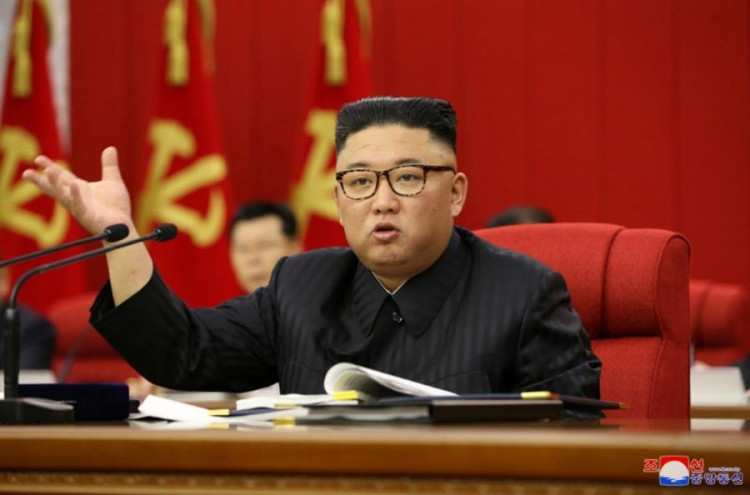
Speaking at a commissioning ceremony at the Nampho Shipyard on North Korea's west coast, Kim described the warship as a turning point for a navy that has historically lagged behind the country's missile and ground forces. State media reported that the vessel has now entered active service and will be assigned to operations along North Korea's western coastline.
"The Navy was the weakest of all the services of our armed forces," Kim said, according to the Korean Central News Agency (KCNA). "But things have changed obviously now." He called the destroyer a "new symbol of sea defense capability."
The launch marks another step in Kim's broader military modernization campaign, which has accelerated since nuclear negotiations with President Donald Trump collapsed in 2019. Since then, North Korea has expanded its missile arsenal, strengthened military ties with Russia and China, and increasingly emphasized naval development as a key component of its defense strategy.
KCNA reported that the Choe Hyon is equipped with anti-aircraft and anti-ship systems and can carry nuclear-capable ballistic and cruise missiles. While the vessel's full capabilities remain difficult to independently verify, military analysts view it as one of the most significant additions to North Korea's fleet in decades.
"It has clearly become a thing of the past when our navy existed as a force for defending the sea off our land," Kim said. "It is rising into a full-fledged service equipped with strategic means as the program of equipping the Navy with nuclear weapons is following its planned course unerringly."
Kim used the ceremony to outline even larger ambitions. According to KCNA, North Korea plans to commission additional strategic warships, including 10,000-ton destroyers, with at least two major surface combatants expected to be launched annually.
"We are now switching over to the stage of building various surface and underwater combat systems and deploying them offshore and in the oceans without feeling any restrictions," Kim said.
South Korean officials and defense experts have suggested the Choe Hyon may have benefited from Russian technical assistance as military cooperation between Moscow and Pyongyang deepens. North Korea's support for Russia's war in Ukraine has fueled speculation that the Kremlin is providing technology, expertise and military know-how in return.
"There is a strong possibility that Russia is sharing certain technologies, equipment, expertise, and know-how with North Korea," Moon Seong Mook of the Korea Research Institute for National Strategy told NBC News. "That may explain why Kim Jong Un appears confident enough to pursue such ambitious military expansion."
Analysts caution, however, that building warships is only part of the challenge. Questions remain about North Korea's ability to maintain and operate a modern fleet capable of sustained deployments beyond its coastal waters.
Hong Min of the Korea Institute for National Unification told NBC News that "naval infrastructure, maintenance capacity, crew training, and the ability to conduct integrated operations" remain significant hurdles for Pyongyang.
Kim has increasingly linked naval modernization to broader strategic goals. Following missile tests conducted from the Choe Hyon earlier this year, he argued that nuclear-armed warships would transform North Korea's ability to defend what it considers its maritime interests. Analysts note that such statements come amid rising tensions with South Korea, particularly over disputed waters near the Northern Limit Line in the Yellow Sea.