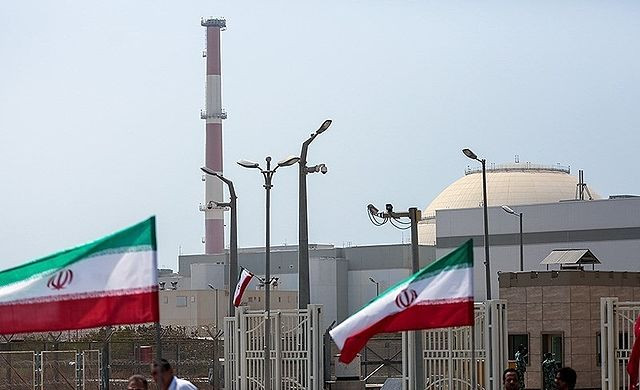
A dispute over the future of international inspections at Iran's nuclear facilities intensified Tuesday after International Atomic Energy Agency (IAEA) Director General Rafael Mariano Grossi insisted inspectors would gain access under a newly signed U.S.-Iran agreement, even as Tehran publicly rejected claims that such visits had been approved.
The disagreement has emerged as one of the first major tests of a memorandum of understanding reached between Washington and Tehran following recent negotiations aimed at easing regional tensions and establishing a framework for longer-term nuclear oversight. The issue has also become central to President Donald Trump's efforts to portray the agreement as a significant diplomatic breakthrough.
Speaking at the Fukushima Daiichi nuclear power plant in Japan, Grossi argued that the language of the agreement leaves little room for ambiguity regarding the role of the U.N. nuclear watchdog.
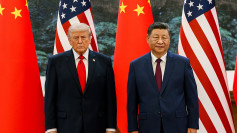
"I can understand political statements, they are part of the reality, but the fundamental thing I would like to remind you and draw your attention to is that there has been a Memorandum of Understanding, signed by both presidents," Grossi said.
According to the IAEA chief, the agreement explicitly places future nuclear activities under international supervision.
"The wording there says explicitly that the nuclear activities that are going to be carried out with the regards to the nuclear material facilities will be supervised by the IAEA - in all letters," Grossi said.
He then addressed the timeline for potential inspections, dismissing questions about whether access would occur immediately.
"Obviously, to do that, we will have to inspect. Whether this happens the day after tomorrow or in one week or in 10 days, it's important, but not essential. This is going to happen," Grossi said.
His remarks contrasted sharply with statements from Iran's Foreign Ministry. Spokesman Esmail Baqhaei rejected reports suggesting that Tehran had agreed to immediate inspections of facilities damaged during recent military operations.
"We did not have a meeting with the director general of the International Atomic Energy Agency, nor do we have any plans for the agency to inspect Iran's nuclear facilities damaged by the U.S. and Zionist military aggression," Baqhaei said.
The spokesman also suggested that any future cooperation would depend on broader implementation of the agreement.
"We are currently working to ensure that all these clauses are fulfilled as prerequisites for the start of negotiations," he said, adding that nuclear discussions remain conditional "upon the implementation of specific clauses of the memorandum."
The conflicting public messages have created uncertainty around one of the agreement's most important provisions. For Washington, international monitoring has been presented as a cornerstone of the diplomatic framework. Administration officials have argued that verification measures are necessary to ensure transparency regarding Iran's nuclear activities and to support future negotiations.
Trump reinforced that position in a social media post Tuesday, directly disputing Tehran's characterization of the deal.
"Despite their protestations and false statements to the contrary, coupled with the drumbeat of the Fake News, which is doing everything possible to make the U.S. Victory as small and insignificant as possible, Iran has fully and completely agreed to highest level Nuclear inspections long into the future (Infinity!!!)," Trump wrote.
The president also linked the inspection issue to broader concessions contained in the agreement, saying it would ensure "Nuclear Honesty" and declaring that "there would be no further negotiations" without such commitments.
The administration has already begun implementing parts of the arrangement. On Monday, U.S. officials announced authorization for certain Iranian oil sales after Tehran reopened the Strait of Hormuz and, according to Washington, agreed to allow IAEA involvement. The reopening of the strategic waterway eased concerns about global energy supplies and helped stabilize oil markets following weeks of geopolitical uncertainty.