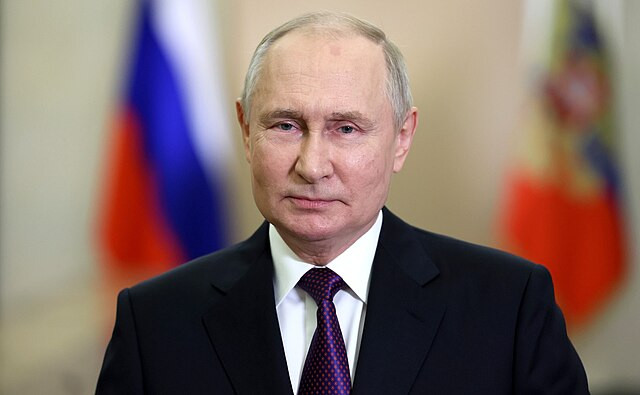
Russian President Vladimir Putin has publicly acknowledged that Ukraine's expanding drone campaign is contributing to fuel shortages inside Russia, marking one of his clearest admissions yet that repeated attacks on the country's energy infrastructure are creating domestic economic pressure as the war enters a new phase.
Speaking to a Russian state television reporter, Putin said Russia is facing a "certain deficit" of fuel following Ukrainian strikes on critical infrastructure, while pledging additional measures to protect refineries and other strategic facilities. His comments came as Ukrainian officials claimed fresh long-range attacks had damaged two more Russian oil refineries, continuing Kyiv's strategy of targeting the logistics that support Moscow's military operations.
The exchange highlights an increasingly important front in the conflict, with Ukraine focusing on Russia's energy sector rather than only battlefield positions. While Moscow insists the attacks have failed to alter military operations, repeated strikes have disrupted fuel supplies, prompted emergency measures in occupied territories and exposed vulnerabilities deep inside Russia.
Ukrainian President Volodymyr Zelensky said Kyiv's latest operations struck two refineries that play a role in supplying Russia's war effort.
"Our 'long-range sanctions' reached two oil refineries in Russia," Zelensky said. He added that each successful strike "means a reduction in the resources that fuel the Russian war machine, and another step toward peace."
According to Ukrainian officials, one refinery is located in Slavyansk-na-Kubani in Russia's Krasnodar region, east of occupied Crimea, while the second is situated in the Yaroslavl region. The attacks form part of a broader campaign that has increasingly targeted fuel production, storage facilities and transportation infrastructure across Russian territory.
The effects have become especially visible in occupied Crimea, where regional authorities have introduced emergency restrictions after repeated Ukrainian attacks.
Last week, Crimea's Moscow-installed administration declared a state of emergency across the peninsula. Regional head Sergei Aksyonov said on Telegram that the measure would simplify government decision-making aimed at stabilizing the region, although officials did not specify what additional emergency powers would be used.
Authorities have already suspended civilian gas sales indefinitely. Aksyonov said available fuel must instead be reserved to "ensure the functioning and security of the Republic of Crimea."
Additional restrictions have spread beyond fuel distribution.
Officials in Sevastopol announced what they described as "enforced temporary measures," including:
- Ending public transportation after 10 p.m.
- Requiring large shops and cafés to close two hours earlier.
- Turning off street lighting during designated periods.
Those measures underscore the growing logistical challenges facing Russian-controlled territories as Ukrainian drones increasingly reach targets previously considered relatively secure.
Despite acknowledging fuel shortages, Putin argued that Ukraine's campaign has failed to produce meaningful military results.
He said Kyiv's objective was to "cause a split in Russian society and force Russia to halt, even if only briefly, the advance of our troops along the line of contact, and create conditions for launching a negotiation process on terms advantageous to our adversary."
"Strikes on our infrastructure, wherever they are directed, have absolutely no effect on the situation at the front, on the line of contact," Putin added.
The Russian leader also disclosed previously unreported details about diplomatic discussions, claiming Ukraine proposed suspending long-range strikes inside Russia. According to Putin, Kyiv additionally suggested limiting combat operations to the four partially occupied regions of Donetsk, Luhansk, Kherson and Zaporizhzhia.
Putin said he rejected the proposal, arguing such an arrangement would enable Ukrainian forces to reposition troops into those contested regions and strengthen their defenses.