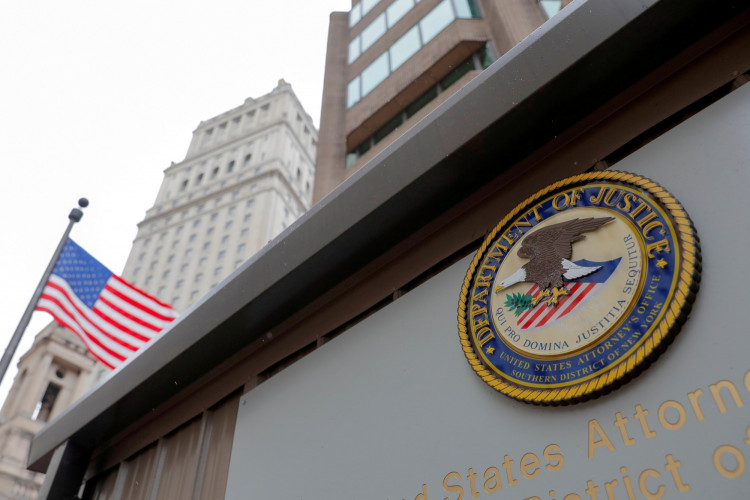
The U.S. Department of Justice has abandoned its criminal investigation into Abbott Laboratories over the company's handling of its Michigan infant formula plant, opting instead to pursue civil enforcement despite a multi-year federal probe into conditions linked to a deadly 2022 contamination outbreak and nationwide formula shortage.
The decision, first reported by The Wall Street Journal, closes one of the highest-profile corporate food safety investigations in recent years. Federal prosecutors spent more than three years examining Abbott's operations at its Sturgis, Michigan, manufacturing facility before ultimately deciding not to file criminal charges against either the company or individual executives.
The criminal investigation centered on Abbott's Sturgis production plant, which at one point supplied roughly 20% of all infant formula consumed in the United States. In early 2022, Food and Drug Administration inspectors conducted a for-cause inspection after reports of infant illnesses and discovered Cronobacter sakazakii, a bacterium capable of causing life-threatening infections in newborns, at multiple locations inside the facility.
Abbott subsequently recalled several major formula brands, including Similac, Alimentum and EleCare, and temporarily shut down the Sturgis plant. The closure triggered a nationwide shortage of infant formula that left parents across the country struggling to obtain specialized nutrition for newborns.
According to FDA and Centers for Disease Control and Prevention accounts cited throughout the litigation, four infants who consumed formula produced at the Sturgis facility developed Cronobacter infections, and two later died.
The government's civil complaint, filed in May 2022, alleged that Abbott manufactured formula under insanitary conditions that violated federal good manufacturing practices. The complaint named Abbott along with three senior plant officials:
- Quality Assurance Vice President Lori J. Randall
- Sturgis Quality Director Keenan S. Gale
- Site Director TJ Hathaway
Rather than pursuing criminal prosecution, the Justice Department has continued relying on a consent decree that permanently subjects Abbott's Sturgis operations to federal oversight.
Under that agreement, Abbott must implement enhanced environmental monitoring, independent expert supervision and rapid recall procedures if dangerous pathogens are detected. The decree also authorizes financial penalties of up to $30,000 per day for violations, subject to an annual cap of approximately $5 million.
Federal officials previously described conditions uncovered during inspections in unusually strong language.
During congressional testimony, FDA leadership characterized what inspectors found as "egregiously unsanitary" and described inspection results as "shocking." According to House Oversight Committee transcripts, FDA officials testified that Abbott "did not establish a system of process controls designed to ensure that infant formula does not become adulterated," while also alleging the company failed to maintain clean product-contact surfaces.
Investigators also examined allegations raised by a whistleblower before the recall began.
A complaint submitted to the FDA in 2021 accused Abbott management of falsifying records, releasing untested formula and misleading federal inspectors during earlier audits. Reporting by ProPublica, based on FDA documents reviewed during the investigation, later indicated that Cronobacter had been detected during Abbott's own environmental testing in both 2019 and 2020.
Despite the extensive investigation, prosecutors faced a significant scientific hurdle.
Federal laboratories were unable to genetically match the Cronobacter strains discovered inside the Sturgis facility with bacteria recovered from the infants who became ill. Moreover, the two available patient samples did not genetically match one another.
Abbott has consistently argued that this missing genetic link undermined claims that its products caused the illnesses.
The company has maintained that no unopened Abbott formula sold to consumers ever tested positive for Cronobacter sakazakii, while asserting that bacteria discovered during inspections were located in non-product-contact areas rather than on manufacturing equipment. In a detailed response published in 2025, Abbott disputed characterizations that the facility was "egregiously unsanitary," arguing that Cronobacter can commonly be found in household kitchens and infant feeding environments.
Although criminal charges have been dropped, Abbott's legal challenges remain far from over.
The consent decree governing its manufacturing operations remains in force, while the company continues defending numerous civil lawsuits involving necrotizing enterocolitis, a severe intestinal disease affecting premature infants. In April 2026, a Cook County jury ordered Abbott to pay damages to four families in one such case. Abbott has said it intends to appeal that verdict, arguing the jury's decision was inconsistent with established scientific evidence.