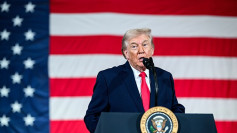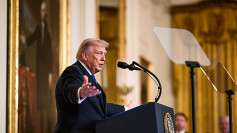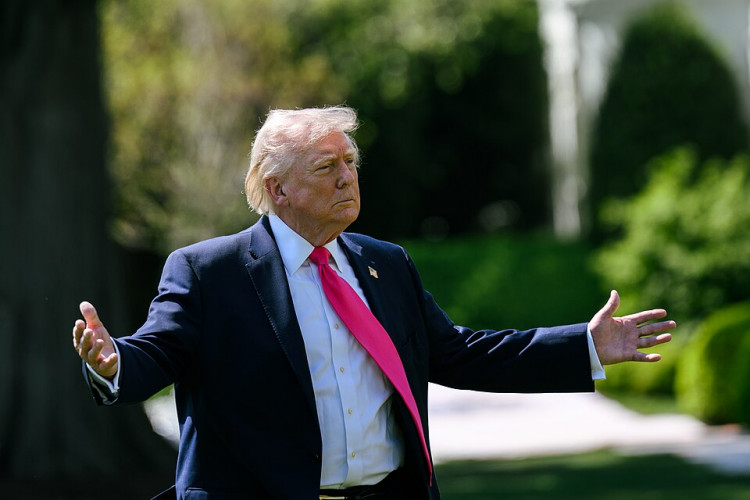
President Donald Trump said his administration is exploring a sweeping overhaul of the U.S. retirement system modeled in part on Australia's mandatory superannuation program, marking one of the clearest signals yet that the White House is considering structural changes to how Americans save for retirement. Speaking from the White House Rose Garden, Trump said officials are studying the Australian framework and suggested the United States could build on it with its own version.
"I made reference today that Australia has a thing going that's very good - it's really worked out very well," Trump said Monday. "We're looking at that very strongly. We're going to be taking that, and we're going to be maybe making it a little bit sharper, a little bit even better. But we're going to be doing that."
The proposal represents a notable expansion of the administration's recent focus on long-term household wealth. While the newly announced Trump Accounts program is designed to provide government-seeded investment accounts for eligible children, the latest initiative would shift attention toward retirement savings for the existing workforce.
Trump said Treasury Secretary Scott Bessent and Commerce Secretary Howard Lutnick have already begun examining Australia's retirement model as the administration considers possible reforms. He also acknowledged that any major overhaul would require congressional approval, signaling that discussions with lawmakers are expected before legislation is introduced.
Australia's superannuation system has frequently been cited by retirement policy experts as one of the world's more robust mandatory savings models. Introduced in the early 1990s, the program requires employers to contribute a fixed percentage of employees' earnings into tax-advantaged retirement accounts managed primarily by private investment funds. Employer contributions currently stand at 12% of ordinary earnings, allowing workers to accumulate retirement assets throughout their careers.
Supporters of the Australian model argue that mandatory employer contributions have helped reduce long-term reliance on government pensions while building one of the largest pools of retirement savings globally. By channeling regular contributions into investment funds over decades, the system has become a significant source of capital for financial markets while increasing retirement balances for many workers.
Whether such a framework could be adapted to the United States remains an open question. The American retirement system relies on a combination of Social Security, employer-sponsored plans such as 401(k)s, individual retirement accounts and personal savings. Participation and contribution levels vary widely, leaving many workers approaching retirement with limited financial reserves.
Policy researchers have cautioned that importing Australia's model would involve substantial changes. The Center for Retirement Research at Boston College has previously noted that while Australia's retirement framework consistently receives high international rankings, it functions alongside other elements of the country's retirement safety net and is not, by itself, a complete solution.
According to the Center for Retirement Research, strengthening retirement security in the United States would still require reinforcing Social Security while expanding access to workplace retirement plans. Analysts have also noted that mandatory employer contributions could impose additional costs on businesses, particularly smaller employers already facing rising labor and operating expenses.
The proposal also builds on a broader White House effort to encourage long-term investing. Earlier initiatives have centered on Trump Accounts for children, designed to provide government-funded investment accounts that families and employers can supplement over time. Administration officials have presented those accounts as a way to increase asset ownership beginning early in life, while the retirement proposal would address wealth accumulation later in workers' careers.