Brett Wattles

The Latest
-
Interstellar Object 3I/ATLAS Sparks Scientific Alarm as Jupiter Encounter Shows 0.00004 Probability Alignment
An unusual interstellar visitor known as 3I/ATLAS is accelerating debate within the scientific community, as researchers confront a growing list of anomalies that raise questions about whether the object behaves like a natural comet. 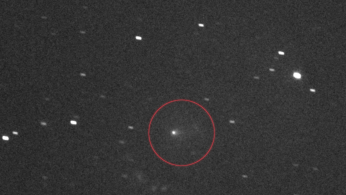
An unusual interstellar visitor known as 3I/ATLAS is accelerating debate within the scientific community, as researchers confront a growing list of anomalies that raise questions about whether the object behaves like a natural comet. -
NASA Faces Scrutiny as Blurry 3I/ATLAS Images Trail Sharper Amateur Photos
NASA is defending the quality of its newly released HiRISE images of interstellar object 3I/ATLAS after a wave of sharper amateur photographs began circulating online, prompting comparisons that place public expectations and scientific priorities in direct conflict. 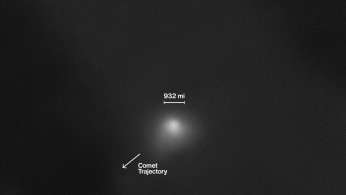
NASA is defending the quality of its newly released HiRISE images of interstellar object 3I/ATLAS after a wave of sharper amateur photographs began circulating online, prompting comparisons that place public expectations and scientific priorities in direct conflict. -
Avi Loeb Accuses NASA of 'Deceptive' 3I/ATLAS Images as Interstellar Object Nears Earth Flyby
NASA's latest release of imagery for interstellar object 3I/ATLAS has triggered new scientific and public scrutiny as the comet-like visitor moves toward its mid-December flyby of Earth. The agency's 19 November publication of HiRISE camera data, taken from the Mars Reconnaissance Orbiter, prompted immediate criticism from Harvard astrophysicist Avi Loeb, whose remarks have revived debate over whether the object's unusual trajectory and physical behavior warrant further examination for possible non-natural origins. NASA's latest release of imagery for interstellar object 3I/ATLAS has triggered new scientific and public scrutiny as the comet-like visitor moves toward its mid-December flyby of Earth. The agency's 19 November publication of HiRISE camera data, taken from the Mars Reconnaissance Orbiter, prompted immediate criticism from Harvard astrophysicist Avi Loeb, whose remarks have revived debate over whether the object's unusual trajectory and physical behavior warrant further examination for possible non-natural origins. -
NASA’s 3I/ATLAS Images Trigger Public Backlash as Scientists Cite 12 Anomalies in Interstellar Visitor
NASA's newly released imagery of interstellar comet 3I/ATLAS has triggered a wave of public skepticism and scientific criticism, as high-resolution photographs expected to shed light on the third known interstellar object instead prompted a backlash over their lack of clarity. NASA's newly released imagery of interstellar comet 3I/ATLAS has triggered a wave of public skepticism and scientific criticism, as high-resolution photographs expected to shed light on the third known interstellar object instead prompted a backlash over their lack of clarity. -
NASA Press Silence on 3I/ATLAS Anomalies Fuels Debate as Scientists Warn of Rising Cosmic-Ray Exposure
NASA's restrained briefing on interstellar object 3I/ATLAS has intensified scrutiny from scientists and space analysts, as renewed attention shifts not only to the comet's unexplained features but also to evidence that the solar system is crossing into a denser region of the Local Interstellar Cloud. With agencies such as the U.S. Space Force highlighting shifting radiation conditions around Earth, researchers argue that the two developments may carry implications far beyond a single celestial object. NASA's restrained briefing on interstellar object 3I/ATLAS has intensified scrutiny from scientists and space analysts, as renewed attention shifts not only to the comet's unexplained features but also to evidence that the solar system is crossing into a denser region of the Local Interstellar Cloud. With agencies such as the U.S. Space Force highlighting shifting radiation conditions around Earth, researchers argue that the two developments may carry implications far beyond a single celestial object. -
New 3I/ATLAS Data Reveals Unusual CO₂ Levels as ISRO, NASA Capture Interstellar Comet in Historic Detail
ISRO and NASA have released the most detailed images to date of 3I/ATLAS, the third confirmed interstellar object to pass through Earth's solar system, giving researchers a rare opportunity to study a comet originating from beyond the Sun's gravitational influence. The new data-drawn from telescopes in India and a suite of U.S. spacecraft orbiting Mars and transiting the outer solar system-captured the comet as it moved deeper into the inner solar system in late 2025. 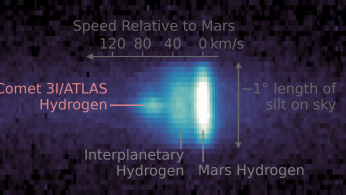
ISRO and NASA have released the most detailed images to date of 3I/ATLAS, the third confirmed interstellar object to pass through Earth's solar system, giving researchers a rare opportunity to study a comet originating from beyond the Sun's gravitational influence. The new data-drawn from telescopes in India and a suite of U.S. spacecraft orbiting Mars and transiting the outer solar system-captured the comet as it moved deeper into the inner solar system in late 2025. -
ISS Broadcast Cut Fuels Online Claims of UFO Flyby, Analysts Cite Routine Signal Loss
A NASA livestream from the International Space Station ignited fresh online speculation this week after viewers noticed clusters of bright lights moving beneath the ISS camera moments before the feed abruptly switched angles and briefly cut out. 
A NASA livestream from the International Space Station ignited fresh online speculation this week after viewers noticed clusters of bright lights moving beneath the ISS camera moments before the feed abruptly switched angles and briefly cut out. -
New NASA Photos Reveal Interstellar Comet 3I/ATLAS as Object Speeds Toward 167 Million-Mile Earth Flyby
NASA unveiled a new set of images this week capturing interstellar comet 3I/ATLAS as it moves deeper into the inner solar system, providing the clearest view yet of only the third confirmed visitor from another star system. The release follows delays caused by the government shutdown, which temporarily halted processing and publication across multiple federal science agencies. NASA unveiled a new set of images this week capturing interstellar comet 3I/ATLAS as it moves deeper into the inner solar system, providing the clearest view yet of only the third confirmed visitor from another star system. The release follows delays caused by the government shutdown, which temporarily halted processing and publication across multiple federal science agencies. -
Italian Observatory Livestream Confirms 3I/ATLAS as Comet, Quelling Online Speculation
An Italian observatory broadcast some of the clearest public images yet of interstellar object 3I/ATLAS, confirming the rare visitor's cometary identity and putting an end to weeks of speculation online. The 40-minute livestream, aired on Nov. 19 by Italy's Virtual Telescope Project, displayed a glowing nucleus, a surrounding coma and a faint dust tail-features that astronomers say leave no ambiguity about the object's nature. 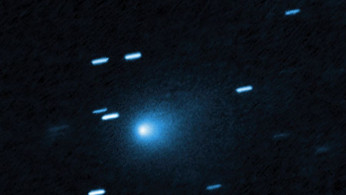
An Italian observatory broadcast some of the clearest public images yet of interstellar object 3I/ATLAS, confirming the rare visitor's cometary identity and putting an end to weeks of speculation online. The 40-minute livestream, aired on Nov. 19 by Italy's Virtual Telescope Project, displayed a glowing nucleus, a surrounding coma and a faint dust tail-features that astronomers say leave no ambiguity about the object's nature. -
NASA Prepares Major 3I/ATLAS Disclosure; Multi-Platform Imagery to Address Months of Speculation
NASA will reveal new imagery of the interstellar comet 3I/ATLAS on November 19, ending months of speculation fueled by amateur observations, halted data releases, and increasingly vocal independent analysis. NASA will reveal new imagery of the interstellar comet 3I/ATLAS on November 19, ending months of speculation fueled by amateur observations, halted data releases, and increasingly vocal independent analysis.
