Tracy Park
The Latest
-
Melania Trump Breaks Silence on Epstein Claims, Says ‘I Am Not Epstein’s Victim’
Melania Trump issued a forceful public denial of any connection to Jeffrey Epstein, delivering a rare and pointed statement at the White House that sought to rebut years of online speculation and reassert her distance from one of the most politically charged scandals in recent U.S. history. 
Melania Trump issued a forceful public denial of any connection to Jeffrey Epstein, delivering a rare and pointed statement at the White House that sought to rebut years of online speculation and reassert her distance from one of the most politically charged scandals in recent U.S. history. -
Army Survivors Dispute Hegseth’s Account of Iran Strike, Call Attack ‘Preventable’ After 6 Killed
Survivors of a deadly Iranian drone strike in Kuwait are publicly challenging the Pentagon's account of the attack, disputing statements by Pete Hegseth that the targeted unit was "fortified" and describing instead a position they say was "unprepared" and exposed when the strike hit. 
Survivors of a deadly Iranian drone strike in Kuwait are publicly challenging the Pentagon's account of the attack, disputing statements by Pete Hegseth that the targeted unit was "fortified" and describing instead a position they say was "unprepared" and exposed when the strike hit. -
Pentagon Meeting With Vatican Envoy Draws Scrutiny After Disputed ‘Avignon Papacy’ Remark
A reported closed-door meeting between senior Pentagon officials and the Vatican's ambassador to Washington has raised tensions between the United States and the Holy See, after accounts of the exchange suggested unusually blunt language and historical references interpreted by some officials as coercive. 
A reported closed-door meeting between senior Pentagon officials and the Vatican's ambassador to Washington has raised tensions between the United States and the Holy See, after accounts of the exchange suggested unusually blunt language and historical references interpreted by some officials as coercive. -
JD Vance Draws Criticism After Hungary Remarks Linking Nuclear Policy to Personal Anecdote
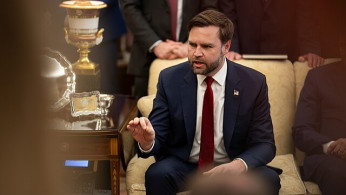
Vice President JD Vance drew widespread criticism after remarks in Budapest linking nuclear negotiations with Iran to a personal anecdote about his wife, comments that quickly circulated online and intensified scrutiny of his role in U.S. foreign policy messaging. Speaking to reporters at Budapest Ferenc Liszt International Airport following meetings with Hungarian officials, Vance addressed ongoing talks with Iranian leaders, including discussions surrounding uranium enrichment. His comments came during a broader trip in which he appeared alongside Viktor Orbán ahead of Hungary’s upcoming election. Vance initially struck a measured tone on negotiations, saying, “We're going in the right direction, but it's going to take a little time,” before recounting a remark from Iranian parliamentary speaker Mohammad Bagher Ghalibaf: “The second thing Ghalibaf said, which again, I found fascinating, he said, 'We refuse to give up the right to enrichment.'” He then introduced a comparison that became the focal point of the backlash. “My wife has the right to skydive, but she doesn't jump out of an airplane because she and I have an agreement that she's not going to do that, because I don't want my wife jumping out of an airplane,” Vance said. The vice president framed the analogy as a way to distinguish between theoretical rights and practical constraints in diplomacy. He added, “We don't really concern ourselves with what they claim they have the right to do. We concern ourselves with what they actually do, and I think the president's been very clear on the enrichment question. Our position on that has not changed.” The remarks were broadcast by C-SPAN and rapidly disseminated across social media platforms, where critics characterized the analogy as ill-suited to the gravity of nuclear negotiations. One user wrote, “Global affairs aren't your marital agreements.” Another commented, “There is tying oneself into a verbal pretzel, and then there is this.” The episode unfolded against a politically sensitive backdrop. Vance’s visit to Hungary had already drawn attention for its overt support of Orbán, a nationalist leader whose policies have strained relations with the European Union. Critics argued that the appearance blurred longstanding diplomatic norms around U.S. involvement in foreign elections. During the trip, Vance also criticized European institutions, accusing Brussels of “disgraceful” interference and claiming the EU sought to “hold down” Hungarian voters. Those remarks reinforced his emerging profile as a leading voice in shaping the administration’s foreign policy posture. Analysts say the controversy underscores the challenges of communicating complex national security issues to a broader audience. While analogies are often used to simplify policy debates, misalignment between tone and subject matter can amplify scrutiny, particularly when discussions involve nuclear capabilities and geopolitical risk. Supporters of the administration have framed the comments as an attempt to make abstract policy disputes more accessible. Critics, however, argue that the analogy risks trivializing a central issue in U.S.-Iran relations, where enrichment limits remain a core point of contention in negotiations. 
Vice President JD Vance drew widespread criticism after remarks in Budapest linking nuclear negotiations with Iran to a personal anecdote about his wife, comments that quickly circulated online and intensified scrutiny of his role in U.S. foreign policy messaging. Speaking to reporters at Budapest Ferenc Liszt International Airport following meetings with Hungarian officials, Vance addressed ongoing talks with Iranian leaders, including discussions surrounding uranium enrichment. His comments came during a broader trip in which he appeared alongside Viktor Orbán ahead of Hungary’s upcoming election. Vance initially struck a measured tone on negotiations, saying, “We're going in the right direction, but it's going to take a little time,” before recounting a remark from Iranian parliamentary speaker Mohammad Bagher Ghalibaf: “The second thing Ghalibaf said, which again, I found fascinating, he said, 'We refuse to give up the right to enrichment.'” He then introduced a comparison that became the focal point of the backlash. “My wife has the right to skydive, but she doesn't jump out of an airplane because she and I have an agreement that she's not going to do that, because I don't want my wife jumping out of an airplane,” Vance said. The vice president framed the analogy as a way to distinguish between theoretical rights and practical constraints in diplomacy. He added, “We don't really concern ourselves with what they claim they have the right to do. We concern ourselves with what they actually do, and I think the president's been very clear on the enrichment question. Our position on that has not changed.” The remarks were broadcast by C-SPAN and rapidly disseminated across social media platforms, where critics characterized the analogy as ill-suited to the gravity of nuclear negotiations. One user wrote, “Global affairs aren't your marital agreements.” Another commented, “There is tying oneself into a verbal pretzel, and then there is this.” The episode unfolded against a politically sensitive backdrop. Vance’s visit to Hungary had already drawn attention for its overt support of Orbán, a nationalist leader whose policies have strained relations with the European Union. Critics argued that the appearance blurred longstanding diplomatic norms around U.S. involvement in foreign elections. During the trip, Vance also criticized European institutions, accusing Brussels of “disgraceful” interference and claiming the EU sought to “hold down” Hungarian voters. Those remarks reinforced his emerging profile as a leading voice in shaping the administration’s foreign policy posture. Analysts say the controversy underscores the challenges of communicating complex national security issues to a broader audience. While analogies are often used to simplify policy debates, misalignment between tone and subject matter can amplify scrutiny, particularly when discussions involve nuclear capabilities and geopolitical risk. Supporters of the administration have framed the comments as an attempt to make abstract policy disputes more accessible. Critics, however, argue that the analogy risks trivializing a central issue in U.S.-Iran relations, where enrichment limits remain a core point of contention in negotiations. -
Trump-Artemis II Call Turns Awkward After Extended Silence Prompts Communication Check
A live exchange between Donald Trump and astronauts aboard Artemis II veered off script after an extended silence interrupted what had been billed as a celebratory call, prompting intervention from mission control and raising questions about whether the breakdown was technical or indicative of a deeper disconnect. 
A live exchange between Donald Trump and astronauts aboard Artemis II veered off script after an extended silence interrupted what had been billed as a celebratory call, prompting intervention from mission control and raising questions about whether the breakdown was technical or indicative of a deeper disconnect. -
Senators Call for Trump Impeachment After Iran Threat, Cite War Powers and Stability Concerns
A group of Democratic lawmakers, led by Ed Markey, is calling for the impeachment of Donald Trump following his recent statements on Iran, intensifying a constitutional confrontation in Washington over war powers and presidential authority amid an ongoing conflict in the Middle East. 
A group of Democratic lawmakers, led by Ed Markey, is calling for the impeachment of Donald Trump following his recent statements on Iran, intensifying a constitutional confrontation in Washington over war powers and presidential authority amid an ongoing conflict in the Middle East. -
Vance Warning Spurs Speculation; White House Denies U.S. Considering Nuclear Use in Iran
Fresh fears over a potential nuclear escalation surfaced Tuesday after JD Vance warned that the United States has "tools in our toolkit that we so far haven't decided to use" against Iran, prompting a rapid rebuttal from the White House as President Donald Trump escalated rhetoric ahead of a deadline tied to the Strait of Hormuz. 
Fresh fears over a potential nuclear escalation surfaced Tuesday after JD Vance warned that the United States has "tools in our toolkit that we so far haven't decided to use" against Iran, prompting a rapid rebuttal from the White House as President Donald Trump escalated rhetoric ahead of a deadline tied to the Strait of Hormuz. -
Hegseth Faces Impeachment Push as Iran War Sparks Constitutional Clash in Congress
A congressional effort to impeach Pete Hegseth is gaining traction as lawmakers escalate scrutiny of the Trump administration's handling of the Iran conflict, opening a new front in Washington's widening debate over war powers and executive authority. 
A congressional effort to impeach Pete Hegseth is gaining traction as lawmakers escalate scrutiny of the Trump administration's handling of the Iran conflict, opening a new front in Washington's widening debate over war powers and executive authority. -
GOP Erupts Over Alleged ‘Sex Texts’ Scandal as Tony Gonzales Faces Resignation Pressure
A fresh political crisis is unfolding in Washington as allegations involving Republican Rep. Tony Gonzales have triggered backlash within the GOP, intensifying pressure on Donald Trump and exposing fractures across the party's narrow congressional majority. 
A fresh political crisis is unfolding in Washington as allegations involving Republican Rep. Tony Gonzales have triggered backlash within the GOP, intensifying pressure on Donald Trump and exposing fractures across the party's narrow congressional majority. -
Trump’s ‘Praise Be to Allah’ Easter Post Sparks Bipartisan Backlash as Iran Tensions Escalate
A Truth Social post by Donald Trump on Easter Sunday has intensified scrutiny of U.S. rhetoric toward Iran, after the president warned of potential strikes and ended the message with the phrase "Praise be to Allah," drawing criticism from political figures across the spectrum and religious advocacy groups. 
A Truth Social post by Donald Trump on Easter Sunday has intensified scrutiny of U.S. rhetoric toward Iran, after the president warned of potential strikes and ended the message with the phrase "Praise be to Allah," drawing criticism from political figures across the spectrum and religious advocacy groups.