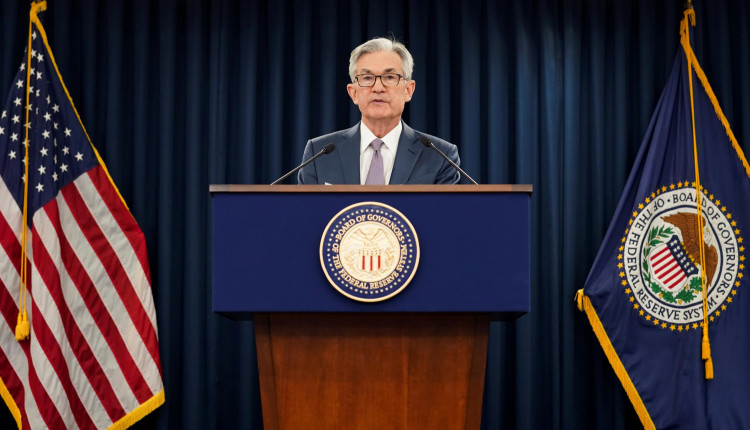
The Federal Reserve announced Thursday that it will take a a groundbreaking emergency action to inject around $2.3 trillion more into an economy and job market that central bank chairman Jerome Powell described as weakening "with alarming pace."
The Fed's sweeping new stimulus package will source the money from the government's coronavirus bailout funds to provide additional aid for smaller businesses and struggling cities because of the current crisis.
Wall Street ended the trading week on a high note Thursday as the US Federal Reserve launched another initiative designed to support local governments and companies crippled by major closures and a record three-week jobless claims.
In a three-week stretch, nearly 17 million Americans have applied for unemployment compensation that have broken past records as the world's biggest economy collapses.
Initial jobless claims marginally fell back from a record high to 6.6 million in the week ended April 4, but 219,000 claims were revised up to nearly 6.9 million by the Department of Labor the previous week.
In a holiday-shortened week, the benchmark S&P 500 index reported the best weekly gain since 1974, backed by early signs that the epidemic had reached a plateau as well as strong global stimulus.
The unprecedented bailout comes in addition to the efforts already carried out by the central bank to resuscitate the economy, including lowering its benchmark interest rate to near zero and raising over $1 trillion to purchase Treasury and mortgage-backed securities to help keep liquidity flowing.
Around the same day that the number of Americans seeking unemployment compensation hit a new high, Powell said the Fed planned to make full use of its resources "forcibly, proactively and vigorously until we are satisfied that we are firmly on the path to recovery." On Wall Street, the Dow Jones Industrial Average jumped 300 points after the Fed move.
Under the new plans, the Fed would provide up to $600 billion in four-year loans to businesses with up to 10,000 employees or revenues of under $2.5 billion through banks. Such loans can be larger than what Small Business Administration loans offer.
The central bank would also purchase up to $500 billion in short-term equities from all 50 states, as well as counties with at least 2 million residents and towns with more than one million.
The efforts of the Fed seek to rejuvenate the $3.8 trillion market for municipal bonds and reduce the tariffs owed by state and local governments. This would help federal departments prevent more layoffs, writes Associated Press' Martin Crutsinger.