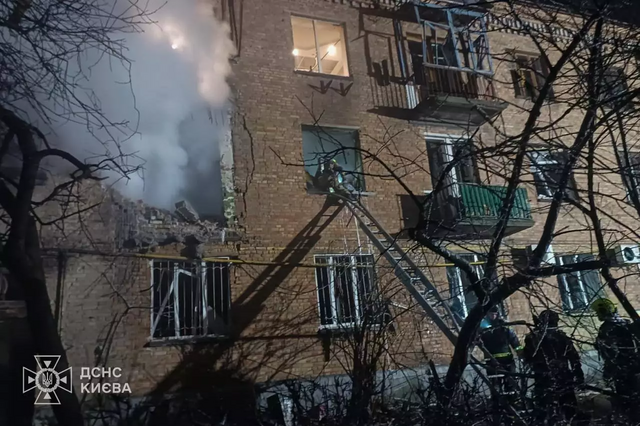
Russia's military conducted one of its largest combined drone-and-missile assaults of the year on Ukraine overnight into Saturday, striking energy sites, rail facilities and civilian areas as U.S., Ukrainian, and Russian officials continued high-stakes negotiations in Florida and Moscow over a potential U.S.-mediated settlement to the nearly four-year war. Ukraine's air force said Russia launched 653 drones and 51 missiles, triggering nationwide sirens as far west as Lviv, while simultaneous air-raid warnings echoed across eastern Poland.
Ukrainian forces intercepted 585 drones and 30 missiles, according to the air force, though strikes still hit at least 29 locations. Ukrainian Minister of Internal Affairs Ihor Klymenko reported eight injuries nationwide, including at least three in the Kyiv region. Russia's Ministry of Defense separately said its air defenses shot down 116 Ukrainian drones over Russian territory.
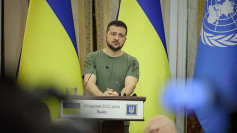
Ukrenergo, Ukraine's national grid operator, said the barrage constituted a "massive missile-drone attack" targeting power stations and critical energy infrastructure. Ukrainian President Volodymyr Zelenskyy said energy facilities were again central targets and noted that a drone strike had "burned down" the train station in Fastiv, outside Kyiv. The International Atomic Energy Agency confirmed that the Zaporizhzhia nuclear plant temporarily lost all off-site power overnight, a development Director General Rafael Mariano Grossi said required urgent restoration to maintain reactor cooling.
As strikes rippled across the region, U.S. special envoy Steve Witkoff, Trump adviser Jared Kushner, and Ukrainian negotiators Rustem Umerov and Andriy Hnatov issued a joint statement from Florida acknowledging that while talks had made progress on a postwar security framework, any "real progress toward any agreement" depends "on Russia's readiness to show serious commitment to long-term peace." A third day of negotiations was scheduled for Saturday.
In Miami, U.S. officials are pressing Ukraine to evaluate a proposal involving territorial concessions and security guarantees, even as Ukrainian leaders publicly resist options requiring land forfeiture. In Moscow earlier in the week, Russian President Vladimir Putin held discussions with Witkoff and Kushner, though diplomats say the Kremlin has shown no indication it is prepared to accept terms acceptable to Kyiv.
U.S. Vice President JD Vance, speaking to NBC, underscored the administration's frustrations. "The Russia-Ukraine thing has been a source of perennial frustration, I think, for the entire White House," he said, adding that officials had been surprised the conflict "was not easy to solve."
European leaders, wary of being sidelined, sought to project unity after the Trump administration's newly released national security strategy suggested Europe faced "civilisational erasure." EU foreign policy chief Kaja Kallas said in Qatar, "The US is still our biggest ally," adding, "I think we haven't always seen eye to eye on different topics, but I think the overall principle is still there. We are the biggest allies and we should stick together."
The night's attacks extended to Russia itself. The Telegram channel Astra posted footage appearing to show a blaze at the Ryazan Oil Refinery, which the Associated Press was unable to verify. Ryazan regional Gov. Pavel Malkov said a residential building and an "industrial facility" were damaged by drone debris. Ukraine's General Staff later reported its forces had struck the refinery as part of long-range efforts to reduce Moscow's energy revenue.