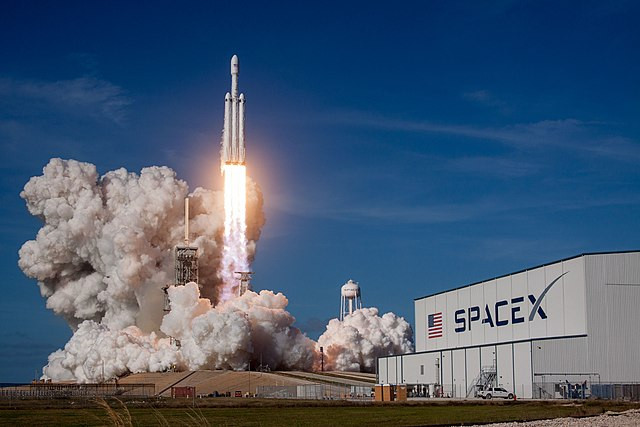
SpaceX is preparing for what could become one of the largest stock-market debuts in history, with Elon Musk's rocket and satellite company targeting a public listing in 2026 that may raise more than $25 billion and push its valuation above $1 trillion, according to multiple reports. Discussions with major banks have begun, Reuters reported, placing the offering window around June or July and signaling the revival of investor appetite for giant technology listings.
A person familiar with the talks told Reuters the IPO preparation reflects the rapid commercial expansion of Starlink, SpaceX's satellite internet service, which is projected to drive most of the company's revenue growth through 2026. Bloomberg separately reported that Musk is targeting an overall valuation of roughly $1.5 trillion, far surpassing the estimated $800 billion figure cited in recent secondary-share discussions. Musk rejected those earlier valuations, writing, "SpaceX has been cashflow positive for many years and does periodic stock buybacks twice a year to provide liquidity for employees and investors. Valuation increments are a function of progress with Starship and Starlink and securing global direct-to-cell spectrum that greatly increases our addressable market."
The offering, if executed, would rival the largest IPOs recorded globally, placing SpaceX in rare company alongside the 2019 flotation of Saudi Aramco, which raised $29 billion and debuted at a valuation of $1.7 trillion. Analysts say a listing of this scale could reset expectations for private companies that have remained off public markets while raising massive sums in private rounds.
Samuel Kerr, head of equity capital markets at Mergermarket, told Reuters, "SpaceX represents one of the most exciting opportunities in the global IPO market and has been on the dream-list of several investors for years." He added that space technology is viewed as "a key frontier in both defense, satellite proliferation and in tech infrastructure in general the growth of orbital data centers."
The company plans to use proceeds from a flotation to fund next-generation space-based data centers, including chip purchases needed to operate them, Reuters and Bloomberg reported. Revenue projections cited by Bloomberg estimate SpaceX will generate close to $15 billion in 2025, rising to between $22 billion and $24 billion the following year as Starlink continues its global expansion.
Industry momentum has accelerated as multiple high-profile technology firms consider listings, including OpenAI and Anthropic, both of which are reportedly weighing IPOs in 2026. A successful SpaceX flotation could spur additional late-stage startups to move toward the public markets after a multiyear drought.
Still, the scale of the offering raises questions about Musk's capacity to run two corporations valued at over $1 trillion simultaneously. Dan Coatsworth, head of markets at AJ Bell, told Reuters, "SpaceX could be one of the most divisive stocks to join the market in years," adding, "If SpaceX did float, expect growing pressure on Musk to commit to only one of his listed entities - Tesla or SpaceX. It's hard to see how one individual could run two $1 trillion+ companies at the same time."