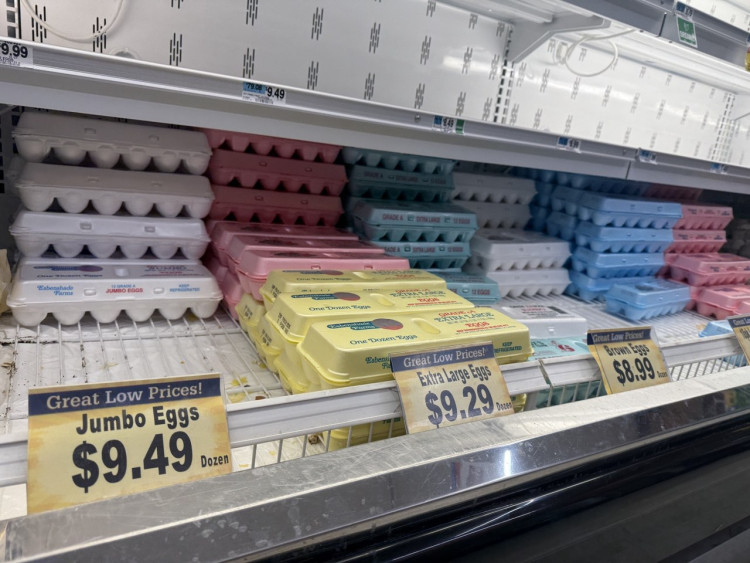
California health officials have urged consumers and food-service operators across Northern California to immediately inspect egg cartons following a Salmonella outbreak that has sickened at least 63 people and sent 13 to hospitals, according to state agencies overseeing the investigation. The illnesses have been traced to brown, in-shell eggs produced by Vega Farms and distributed widely through retail and commercial channels.
The California Department of Public Health said the outbreak involves Salmonella Enteritidis, a strain commonly associated with eggs and poultry. Investigators have linked the infections to specific production runs from Vega Farms after environmental sampling at the facility returned multiple positive results matching the outbreak strain.
The recall applies to eggs bearing a handler code of 2136, which is printed on the side of affected cartons. Health officials said consumers must also check the Julian date, a three-digit number indicating the day of the year the eggs were packed. Any cartons marked with a Julian date of 328 or lower fall under the recall, as do products carrying a sell-by date of Dec. 22, 2025, or earlier.
State regulators said the eggs were distributed to a broad range of outlets, including grocery stores, food co-operatives, restaurants, and farmers markets, raising concern that consumers may have already purchased or consumed the products unknowingly. Officials emphasized that contaminated eggs may appear normal in smell, taste, and appearance.
Key figures from the investigation include:
- 63 confirmed illnesses linked to the outbreak
- 13 hospitalizations reported to date
- 0 deaths confirmed
- Multiple environmental samples from the farm testing positive for the outbreak strain
The recall was initiated voluntarily by Vega Farms earlier this month, but authorities said the scope of the alert widened as additional cases were confirmed. Distribution of the affected eggs has been paused while corrective actions are implemented at the facility under the oversight of the California Department of Food and Agriculture.
Salmonella infection typically develops between six hours and six days after exposure and can cause diarrhea, fever, and abdominal cramps. While many healthy adults recover without treatment, public health officials warned that children, older adults, pregnant women, and people with weakened immune systems face a higher risk of severe illness and complications, including bloodstream infections requiring hospitalization.
Health authorities advised anyone who has consumed the recalled eggs and is experiencing symptoms to seek medical care promptly. They also cautioned that relying on visual inspection of eggs is ineffective, making verification of carton codes and dates essential.
Consumers who identify recalled eggs in their homes were instructed not to eat them. Instead, officials said the products should be discarded immediately or returned to the place of purchase for a refund. After handling the eggs or cartons, consumers should wash their hands thoroughly and sanitize any surfaces, utensils, or refrigerator shelves that may have come into contact with them.