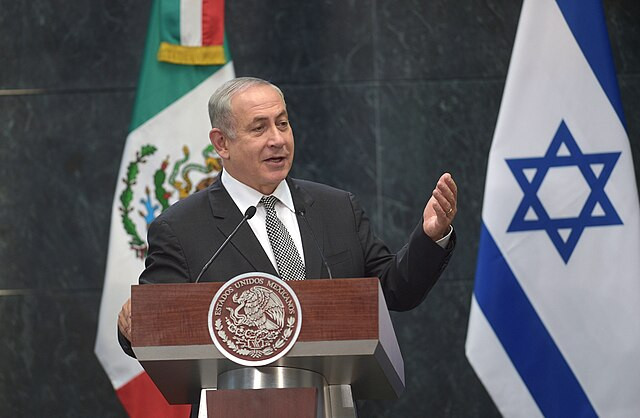
Israeli Prime Minister Benjamin Netanyahu appeared in public Monday and gave a U.S. television interview hours after Iranian state-linked outlets claimed he had been killed in a missile strike, dismissing the reports and outlining what he described as a limited timeline for Israel's confrontation with Tehran.
The claims, attributed to Iran's Fars news agency and statements linked to the Islamic Revolutionary Guard Corps (IRGC), alleged that missiles had struck the prime minister's office in Jerusalem and left his fate "unclear." The reports spread rapidly across social media and briefly surfaced on regional broadcasts before Israeli officials denied them.
Netanyahu's office told The Times of Israel the reports were "fake news." Video footage soon showed the 76-year-old prime minister walking with volunteers and Israeli soldiers, countering speculation that had circulated for several hours online.
In a Fox News interview, Netanyahu shifted focus from the rumors to Israel's broader military objectives. He rejected the notion that the current confrontation with Iran would devolve into a prolonged regional conflict.
Netanyahu said the campaign would not be an "endless war" and instead predicted "quick and decisive action." While acknowledging the effort "may take some time but won't take years," he framed the operation as a finite push to blunt Iran's advancing military capabilities.
According to Netanyahu, Israeli officials believe Tehran accelerated its weapons programs following a 12-day conflict last June involving coordinated strikes by Israel and the United States. "They started building new sites, new places, underground bunkers that would make their ballistic missile programs and their atomic bomb programs immune within months," he said.
He added that Iran has continued developing "new weapons sites," arguing that Israel faces a narrowing operational window. Delaying action, he suggested, risks reaching a point where "no action could be taken in the future."
The conflict has already expanded beyond direct Israeli-Iranian exchanges. Israeli Defense Minister Israel Katz said he and Netanyahu ordered the Israel Defense Forces to seize "strategic high ground" in Lebanon in response to continued Hezbollah fire into northern Israel. Hezbollah, backed by Tehran, is regarded by Israeli officials as Iran's most capable regional proxy.
The IRGC, in its initial statement, claimed that "the office of the criminal prime minister of the Zionist regime and the headquarters of the regime's air force commander were targeted" using Kheibar missiles. The statement stopped short of confirming Netanyahu's death but said his status was uncertain.