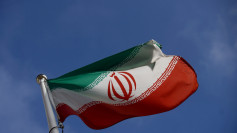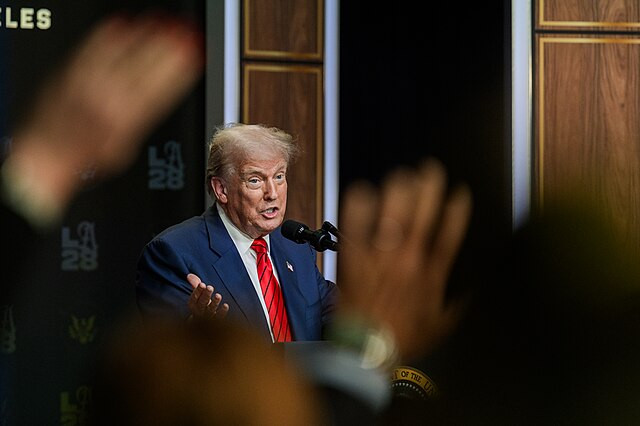
Donald Trump abruptly halted a planned military strike against Iran and extended a fragile ceasefire, saying the Iranian government is "seriously fractured" and may still present a unified negotiating position, even as U.S. forces remain on standby and a naval blockade continues.
The decision, announced Tuesday via Trump's Truth Social platform, marked a sharp reversal after days of escalating rhetoric and came just hours before a two-week truce was set to expire. Trump said the pause followed a request from Pakistan's leadership, underscoring the role of intermediaries in an increasingly volatile standoff.
In his statement, Trump wrote that "the Government of Iran is seriously fractured, not unexpectedly so," adding that Pakistan's Field Marshal Asim Munir and Prime Minister Shehbaz Sharif had urged Washington to delay action "until such time as their leaders and representatives can come up with a unified proposal."
The president emphasized that military readiness remains intact, stating he had instructed U.S. forces to maintain the blockade and remain "ready and able," while refraining from immediate strikes. He said the ceasefire would continue until negotiations conclude "one way or the other."
The announcement contrasted sharply with Trump's earlier remarks in an interview with CNBC, where he dismissed the idea of prolonging the truce. "I don't want to do that. We don't have that much time," he said, projecting urgency and impatience only hours before ordering the pause.
In the same interview, Trump portrayed U.S. military dominance in stark terms, claiming American forces had "taken out their navy, we've taken out their air force, we've taken out their leaders," and asserting that Tehran "had no choice" but to accept U.S. conditions. He also said the United States was "going to end up with a great deal."
Trump went further, asserting that there had already been "regime change" in Tehran and that current leadership figures were "much more rational." That claim has not been independently verified, and Iranian officials have not acknowledged any such shift, leaving the assertion unconfirmed.
Diplomatic efforts tied to the ceasefire appear uncertain. Talks were expected to take place in Islamabad, with U.S. Vice President JD Vance slated to lead the American delegation and Iranian parliamentary speaker Mohammad Bagher Qalibaf anticipated as Tehran's representative. As of Tuesday evening, however, no high-level negotiations had begun.
The lack of immediate diplomatic progress has raised questions about the substance behind the ceasefire extension. The White House has not released a detailed account of Trump's discussions with Pakistani officials, and defense authorities have not outlined the operational scope of the postponed strike.