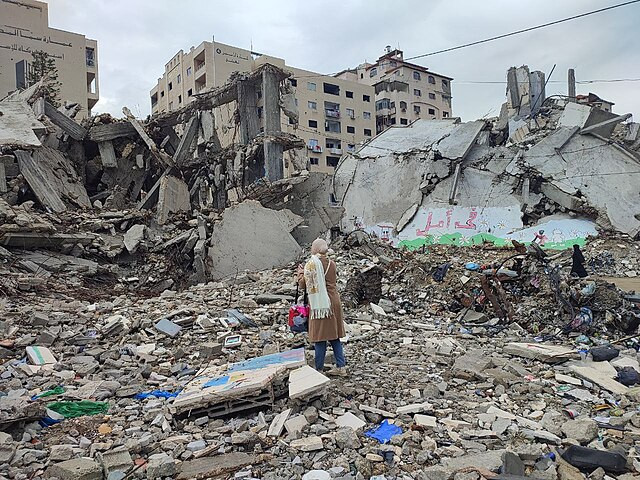
The United Nations' top food-security monitoring body said Friday that famine conditions in Gaza have eased following an October ceasefire and increased humanitarian access, but warned that the entire territory remains at risk of starvation and could slide back into famine if aid flows are disrupted or fighting resumes.
In its latest assessment, the Integrated Food Security Phase Classification, or IPC, said there were "notable improvements" in food security and nutrition since an August analysis that marked the first famine declaration in the Middle East. Still, the IPC stressed that the situation is "highly fragile," with nearly 2,000 people projected to face catastrophic hunger through April and the entire Gaza Strip classified at emergency levels.
"No areas are classified in Famine," the IPC said, while adding that "the situation remains critical: the entire Gaza Strip is classified in Emergency."
The findings come as a U.S.-brokered ceasefire between Israel and Hamas enters a pivotal stage, with the first phase nearing completion and negotiations over a more difficult second phase still unresolved. Both sides have accused each other of violating the truce, raising concerns among aid agencies that renewed conflict could quickly reverse recent gains.
According to the IPC, famine was offset by a significant reduction in hostilities, a proposed peace plan and improved access for humanitarian and commercial food deliveries. People in Gaza are now eating two meals a day, up from one meal daily during the summer, the group said.
That situation "is clearly a reversal of what had been one of the most dire situations where we were during the summer," Antoine Renard, the World Food Program's director for the Palestinian territories, told U.N. reporters in a video briefing from Gaza City Thursday. He said food access has "significantly improved," but warned that shelter remains the most urgent challenge.
More than 70% of Gaza's population is living in makeshift shelters, according to the U.N., with winter rains flooding tents and increasing the risk of hypothermia. Aid groups estimate nearly 1.3 million Palestinians need emergency shelter, while displacement continues to drive food insecurity and dependence on assistance.
The IPC warned that humanitarian access, while improved, "fluctuates daily and is limited and uneven across the strip." Over the next 12 months, more than 100,000 children between six months and five years old are expected to suffer acute malnutrition and require treatment, the report said.
Israeli officials sharply rejected the findings. Israel's military aid coordination agency, COGAT, said it adheres to the ceasefire and allows the agreed volume of aid into Gaza, adding that deliveries "significantly exceed the nutritional requirements of the population" under international standards. The Israeli Foreign Ministry said the report does not reflect reality and that more than the required amount of aid is reaching the territory.
Prime Minister Benjamin Netanyahu has previously dismissed IPC findings, calling an earlier report "an outright lie." On Friday, Foreign Ministry spokesman Oren Marmorstein said on X that faced with "overwhelming and unequivocal evidence, even the IPC had to admit that there is no famine in Gaza," while accusing the group of presenting a "distorted" picture.
Aid organizations countered that improved supply figures do not equate to meaningful access. "This is not a debate about truck numbers or calories on paper, it's about whether people can actually access food, clean water, shelter and health care safely and consistently. Right now, they cannot," said Bushra Khalidi, Oxfam's policy lead for Israel and the occupied Palestinian territory.
Oxfam said hunger levels remain "appalling and preventable," alleging that Israeli authorities continue to block aid. "Oxfam alone has $2.5m worth of aid including 4,000 food parcels, sitting in warehouses just across the border. Israeli authorities refuse it all," Nicolas Vercken, campaigns and advocacy director at Oxfam France, said in a statement.