Venezuela and Colombia moved to high alert in the opening days of 2026 as their leaders issued stark warnings of armed resistance in response to threats and actions by U.S. President Donald Trump, escalating fears of a broader regional confrontation across Latin America.
Venezuela's acting president, Delcy Rodríguez, appeared on state television flanked by senior military commanders, declaring the country prepared to confront what she described as foreign aggression following the U.S. capture of Nicolás Maduro. "What was done to Venezuela can be done to anyone," Rodríguez said, vowing to resist what she characterized as an imperial campaign against national sovereignty, according to the Express.
Rodríguez, who assumed office after Maduro was taken into U.S. custody, has ordered Venezuelan forces into full operational readiness and announced the creation of a commission tasked with securing Maduro's release. The Ministry of Defence confirmed heightened alert levels, warning of possible further incursions. Maduro, appearing in a New York courtroom, pleaded not guilty to drug trafficking charges and declared himself a "decent man," reinforcing the government's defiant posture.
In neighboring Colombia, President Gustavo Petro adopted an even sharper tone, warning that U.S. aggression could trigger regional upheaval. Writing on X, Petro said military action would "unleash the popular jaguar," and added: "For the Homeland I will take up arms again that I do not want." He said the threat compelled him to abandon a peace oath he took in 1989.
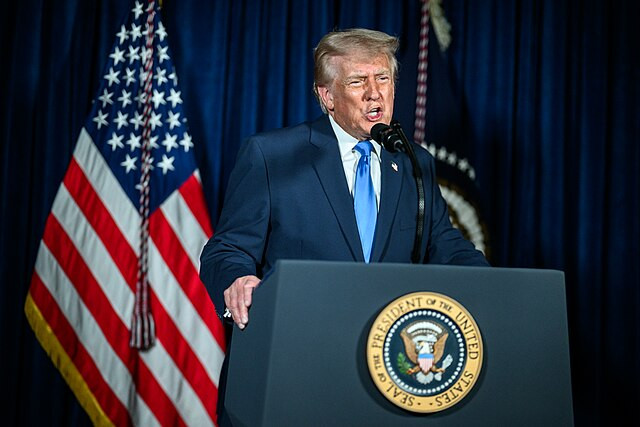
Petro's remarks followed Trump's public criticism of the Colombian leader, whom the U.S. president labeled a "sick man" connected to cocaine trafficking. Asked about possible U.S. action in Colombia, Trump responded, "Sounds good to me." Petro subsequently ordered Colombian officers deemed sympathetic to Washington to step aside, warning that indiscriminate bombing could revive guerrilla movements and kill civilians.
The fallout has reverberated internationally. At an emergency U.N. Security Council session, multiple governments criticized the U.S. operation as a breach of international norms, according to the New York Times. Russia accused Washington of pursuing regime change, while Panama called for a Venezuelan transition led by opposition figures rather than foreign intervention.
Colombia has reinforced its border with Venezuela amid fears of refugee flows and armed spillover. Al Jazeera reported that millions of Venezuelans already residing in Colombia have strained social services, heightening anxiety over renewed instability. Protests have erupted in Caracas, with reports of gunfire near the presidential palace.
Trump has dismissed the regional warnings. Speaking to NBC News, he said the United States is targeting criminal networks rather than nations. He later reiterated that there would be no war with Venezuela, telling MSNBC's Joe Scarborough: "The difference between Iraq and this is that Bush didn't keep the oil."
Legal scholars writing on EJIL: Talk! described the U.S. action as a serious violation of sovereignty, while ABC News analyst Elizabeth Neumann called it a "new low for the world order." Jason Pack wrote in The Guardian that "Venezuela is full of armed groups that would resist the regime's collapse," warning of prolonged conflict. BBC correspondent Katy Watson reported that Trump's strategy appears tied to curbing migration, noting that nearly eight million Venezuelans fled the country under Maduro's rule, while cautioning that intervention could worsen the crisis.