President Donald Trump lashed out at two of his own Supreme Court nominees after a 6-3 ruling in Learning Resources, Inc. v. Trump struck down his emergency tariffs, declaring their decision "terrible" and "an embarrassment to their families" following a landmark opinion that curtailed presidential authority under the International Emergency Economic Powers Act.
The Supreme Court's majority, led by Chief Justice John Roberts and joined by Justices Sonia Sotomayor, Elena Kagan, Neil Gorsuch, Amy Coney Barrett and Ketanji Brown Jackson on key portions of the ruling, held that IEEPA does not authorize a president to impose tariffs. According to SCOTUSblog's summary, the Court vacated and remanded the lower court judgment in a 6 to 3 decision issued on February 20, 2026.
The constitutional stakes were explicit. As Time summarized the majority's reasoning, the Court pointed to the Constitution's allocation of tariff authority to Congress, noting, "The Framers gave 'Congress alone' the power to impose tariffs during peacetime."
The case was brought by several businesses, including educational toy companies such as Learning Resources, Inc., whose operations depend on stable import costs. The lawsuit challenged Trump's use of IEEPA, a 1977 law designed for national emergencies, to levy sweeping tariffs without explicit congressional authorization.
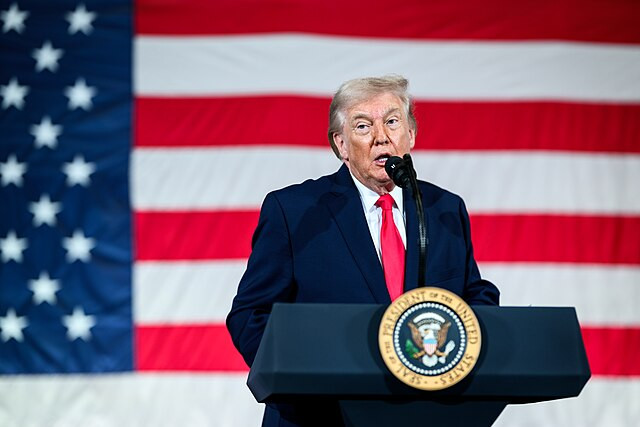
In a rare briefing room appearance described by the Washington Examiner, Trump was asked whether he regretted nominating Justices Gorsuch and Barrett. "I don't want to say whether or not I regret. I think their decision was terrible. I think it's an embarrassment to their families, if you want to know the truth. The two of them," he said.
He contrasted that criticism with praise for dissenters. Justice Brett Kavanaugh authored the principal dissent, joined by Justices Clarence Thomas and Samuel Alito, according to The Strait Times. Trump reportedly commended Kavanaugh and singled out Alito as well.
Legal observers described the decision as a boundary-setting moment. Writing in The Guardian, Ed Pilkington said the Court has often stood aside while Trump "run roughshod over the constitutional separation of powers," but that in this case it "finally stirred itself to set boundaries."
Barb McQuade, a University of Michigan law professor, wrote on social media: "At last. SCOTUS remembers that Congress is a separate and co-equal branch of government, to whom the Constitution assigns the power to levy taxes. One of Trump's favorite levers is removed from the arsenal of extortion."
The ruling represents a direct check on executive power in trade policy. By clarifying that IEEPA cannot serve as a vehicle for unilateral tariff imposition, the Court reinforced Congress's Article I authority over taxation and duties.