The Supreme Court dealt a sweeping rebuke to President Donald Trump's trade strategy on Feb. 20, 2026, striking down his global tariffs in a 6-3 ruling that curtailed the use of the International Emergency Economic Powers Act and triggered an angry reaction inside the White House, where Trump reportedly called the decision "a disgrace."
The ruling dismantled a central pillar of Trump's second-term economic agenda, invalidating tariffs that had generated more than $175 billion in revenue and were imposed under IEEPA, a statute historically used to regulate financial transactions during national emergencies.
Chief Justice John Roberts, writing for the majority, concluded that tariff authority rests with Congress under the Constitution. The opinion emphasized that the executive branch must demonstrate "clear congressional authorisation" when asserting sweeping economic powers. The Court relied in part on the "major questions doctrine," which requires explicit legislative approval for actions carrying significant economic and political consequences.
Joining Roberts were Justices Sonia Sotomayor, Elena Kagan, Ketanji Brown Jackson, Neil Gorsuch and Amy Coney Barrett. Justices Clarence Thomas, Samuel Alito and Brett Kavanaugh dissented, arguing that tariffs historically fall within broader presidential authority to regulate imports.
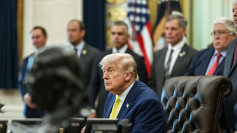
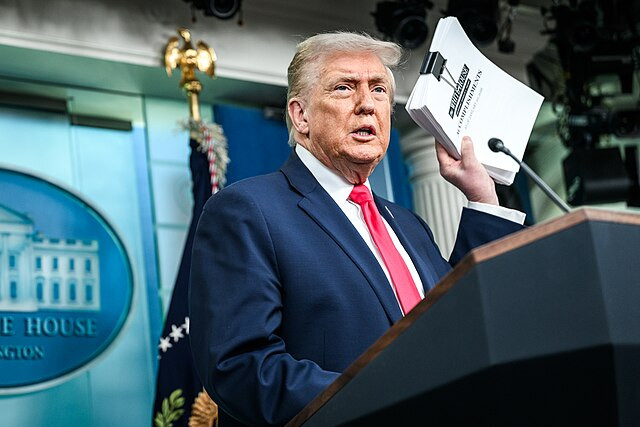
The decision landed while Trump was attending a breakfast meeting with U.S. governors at the White House, according to contemporaneous reporting. CNN reported that the president became "enraged" and began ranting about the ruling before swearing "these e*ing courts." Social media descriptions characterized the episode as a "full-blown meltdown," reflecting witness accounts rather than official transcripts.
Later public remarks echoed the tone. Trump criticized the justices who ruled against him and signaled he would pursue alternative legal pathways to reinstate tariffs, framing the confrontation as far from over.
The economic and political implications are immediate:
- More than $175 billion in tariff revenue is implicated
- Importers may seek refunds, depending on lower court proceedings
- Global trade partners face renewed uncertainty over U.S. policy
Businesses and states had challenged the tariffs, arguing the administration improperly used emergency powers to bypass Congress. Lower courts had already expressed skepticism, concluding that IEEPA did not grant "unbounded" authority to impose import taxes.
Economists have warned that the tariffs increased costs for American companies and consumers during a period of elevated inflation. Administration supporters countered that the measures strengthened domestic industry and bolstered federal revenue.
The Supreme Court did not ban tariffs outright. Instead, it ruled that IEEPA does not provide the authority Trump claimed. The administration has indicated it may look to other statutes, including provisions of the Trade Act of 1974, to craft a new tariff framework.