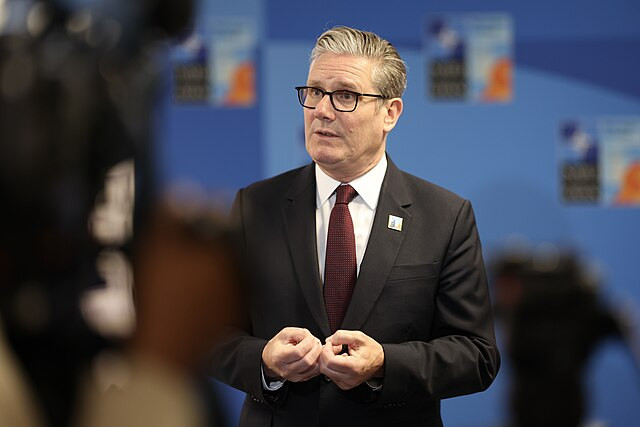
U.K. Prime Minister Keir Starmer confirmed Sunday that Britain has authorized the United States to use select U.K.-linked military bases for what he described as "specific and limited defensive" strikes on Iranian missile facilities, following a rapid escalation in the Middle East after joint U.S.-Israeli operations reportedly killed Iran's Supreme Leader, Ali Khamenei.
The decision places the United Kingdom in a sensitive position as tensions surge across the Gulf. Iranian forces have launched retaliatory missile and drone attacks across multiple countries in the region, raising concerns about the safety of British nationals and military personnel stationed abroad.
Starmer emphasized that Britain is not participating in offensive combat operations. Instead, he said, the government had granted permission for the U.S. to use certain bases to target Iranian missile storage depots and launchers, with the stated aim of preventing further strikes that could endanger "British nationals, UK forces, and allied countries."
The prime minister cited the presence of roughly 200,000 British citizens living in Gulf states as a key factor in the decision. He also stressed that U.K. military assets remain focused on defensive intercepts and regional support.
A government-issued legal summary stated that the authorization complies with international law under the doctrine of collective self-defence.
Two installations have been identified in public reporting as central to the arrangement:
- RAF Fairford, in Gloucestershire, used for U.S. bomber rotations and previous multinational operations.
- Diego Garcia, in the British Indian Ocean Territory, a longstanding joint U.K.-U.S. facility providing logistics and air support capabilities.
Under bilateral agreements, U.S. forces operate under American command but require British consent for certain missions launched from U.K. sovereign territory. Officials said American aircraft and personnel would conduct the operations, with no British crews involved and no U.K. participation in strike planning.
The decision has triggered domestic political backlash. Labour MP Richard Burgon wrote on X, "I am deeply alarmed that British military bases will be used in Trump's bombing of Iran. These attacks violate international law." He added, "The UK government should be focused on de-escalation, diplomacy and a ceasefire - that's the best way of keeping people safe, not following Trump."
Other lawmakers and security officials have defended the move as a measured step designed to protect British lives and uphold alliance commitments. Later Sunday, the Defence Ministry confirmed that an RAF aircraft intercepted and destroyed an Iranian drone heading toward Qatar "to help defend allies in the Middle East."
The episode highlights the broader scale of the U.S. global military network. Reports estimate the United States operates between 750 and 800 military facilities across roughly 80 countries and territories, with significant concentrations in Japan, Germany and South Korea. In Britain, about a dozen major sites host U.S. personnel under agreements dating back to World War II and NATO arrangements.