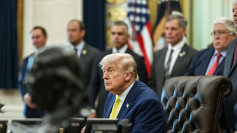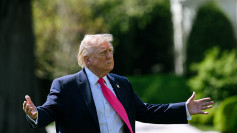
President Donald Trump dismissed Homeland Security Secretary Kristi Noem on Thursday, abruptly removing a central figure in his administration's immigration enforcement agenda and nominating Sen. Markwayne Mullin (R., Okla.) as her successor. The announcement, posted on Trump's Truth Social platform, signals a sudden leadership change at the Department of Homeland Security, an agency at the center of the administration's deportation and border-security strategy.
Noem's departure will take effect March 31, ending a roughly yearlong tenure that saw DHS expand immigration enforcement operations and detention capacity nationwide. Trump attempted to frame the move as amicable, writing that Noem had "served us well" and adding, "I thank Kristi for her service at 'Homeland.'"
The president simultaneously indicated that Noem would remain involved in his administration through a newly created diplomatic-style role.
Trump said she would serve as "Special Envoy for The Shield of the Americas," which he described as "our new Security Initiative in the Western Hemisphere." He added that additional details about the initiative would be announced later this week.
No formal documentation explaining the structure, scope or reporting lines for the initiative has yet been released, leaving analysts uncertain about the practical authority attached to the position.
Noem's exit follows mounting political pressure tied to several controversies that emerged during congressional hearings earlier this week. Lawmakers questioned her handling of DHS operations, including a $200 million advertising campaign promoting the administration's immigration policies.
During testimony before Congress, Noem said President Trump had supported the campaign, which prominently featured her as the public face of the administration's deportation efforts.
Within a day, however, Trump appeared to contradict that assertion. Speaking to Reuters, he said: "I never knew anything about it."
The conflicting accounts intensified scrutiny on the campaign's funding and messaging, leaving questions about how the initiative had been authorized.
Noem also faced sharp questioning from lawmakers over DHS operations connected to the deaths of two protesters in Minnesota, with members of Congress pressing her about oversight and rules governing federal enforcement actions.
The hearing turned even more contentious when Rep. Sydney Kamlager-Dove (D., Calif.) asked Noem directly whether she had "had sexual relations" with Corey Lewandowski, a longtime Trump political adviser who serves as a special government employee at DHS.
Noem rejected the premise of the question.
"I am shocked that we're going down and peddling tabloid garbage in this committee today," she said during the hearing.
Kamlager-Dove responded that a clear answer was warranted if the issue involved a federal official and a subordinate, calling it "the easiest" question.
Noem refused to address the allegation directly and repeated her dismissal of the claims.
"It is garbage," she said.
The exchange did not produce evidence confirming an affair, and no independent corroboration was presented during the hearing.
Noem, a former South Dakota governor, had become one of the most visible officials implementing Trump's immigration crackdown. DHS expanded detention facilities and accelerated recruitment of enforcement officers during her tenure, part of the administration's broader plan to increase arrests and deportations of undocumented migrants.
Civil-rights organizations and immigrant advocacy groups have filed numerous lawsuits challenging those policies, leaving ongoing legal battles for DHS leadership to manage.
Trump's choice of Mullin as her successor suggests the administration intends to maintain its hardline immigration approach. The Oklahoma senator, a close ally of the president, will require Senate confirmation before assuming the role.