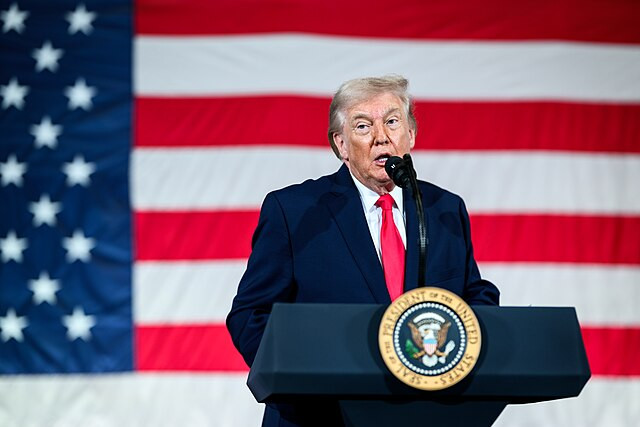
President Donald Trump, the Pentagon, and the Department of Defense's All-domain Anomaly Resolution Office have become the focus of renewed scrutiny after the president called on federal agencies to release classified files related to UFO sightings and extraterrestrial activity, yet weeks later no documents have been made public. The delay has reignited questions in Washington over how quickly sensitive national security records can realistically be declassified.
Trump said in February that government agencies should begin identifying and releasing classified material tied to unidentified aerial phenomena, a move that followed renewed public fascination with the subject. The renewed interest gained momentum after former President Barack Obama joked on a podcast that aliens were "real," before clarifying he was referring to the statistical likelihood of life elsewhere in the universe.
The remark circulated widely online and intensified speculation about what the U.S. government might be withholding.
But officials familiar with the declassification process say presidential support for transparency does not immediately translate into public releases. Records tied to unidentified aerial sightings often contain sensitive information about radar capabilities, intelligence collection methods, and advanced military technology.
Those factors complicate the review process because security officials must examine documents carefully before allowing them into the public domain.
According to reporting cited by Moneycontrol, the work involves reviewing material line by line to remove details that could expose classified weapons systems, surveillance techniques, or operational military information. Because the records span decades and involve multiple agencies, the review process can take months or even years.
The White House has suggested that the disclosure effort remains ongoing. White House spokesperson Anna Kelly told reporters to "stay tuned" when asked how Trump's approach to UFO transparency would differ from earlier government disclosure efforts.
The Pentagon's investigation into unidentified aerial phenomena is largely coordinated by the All-domain Anomaly Resolution Office, a unit established to study unusual objects observed by military personnel and sensors.
The office collects and analyzes reports from a range of sources, including:
- Military pilots reporting unusual aerial encounters
- Radar and satellite observations
- Sensor data from naval and air platforms
Defense officials say the unit aims to document and analyze unexplained sightings through what the Pentagon describes as a rigorous analytical process.
Researchers who have studied past government disclosures note that previous document releases-dating back to the 1970s and later decades-often produced routine paperwork rather than definitive evidence of extraterrestrial activity. Many reports involved unexplained lights, radar anomalies, or incidents that investigators ultimately could not verify.