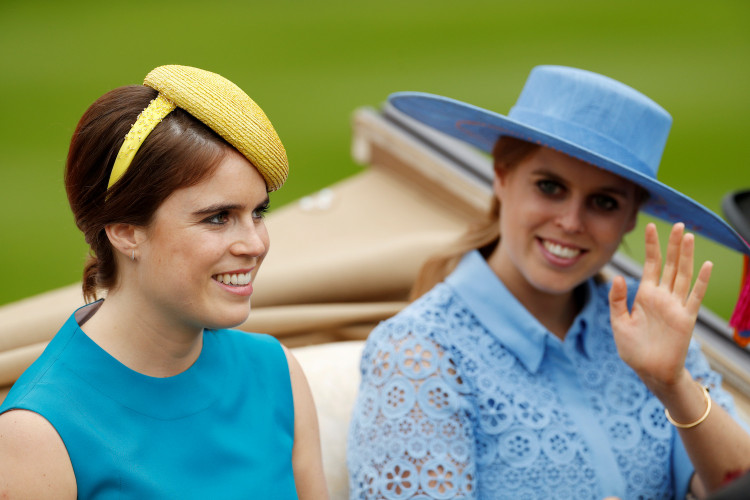
Princess Beatrice and Princess Eugenie are facing renewed pressure over whether they should continue using their royal titles, as the long tail of Prince Andrew's association with Jeffrey Epstein continues to reshape the standing of the York branch inside the House of Windsor. The debate has sharpened after fresh commentary from royal observers, unfavorable public polling and the broader effort by King Charles III and Prince William to reduce scandal risk around the monarchy.
The York sisters themselves are not accused of wrongdoing in the material provided. But their position has become more precarious as Prince Andrew's fall from grace has accelerated, leaving Beatrice and Eugenie caught between inherited status and an institution increasingly focused on discipline, utility and public optics.
The immediate pressure comes from a simple question now circulating in royal coverage: what is the purpose of titles for family members who are not working royals. Royal commentator Robert Jobson, as cited in the source material, argued that the monarchy's internal logic has become more transactional. "You work for the Crown, you keep the title. You don't, you don't," Jobson said.
That view reflects a broader shift under Charles and, even more sharply, under William, who is widely portrayed as taking a narrower, more functional view of the monarchy. In the source material, Jobson says Charles "loves those girls. Always has." But affection and institutional calculation are no longer the same thing. The more the palace tries to separate active royals from scandal, the more awkward the York sisters' status becomes.
The political and public mood has also moved against them. According to the figures cited in the source material, a Daily Express poll conducted from March 13 to March 16 found:
- 56% said Beatrice and Eugenie should lose their princess titles
- 39% said they should not
- 5% were undecided
Polls of that kind are not determinative, but they do capture a sentiment that has become harder for the palace to ignore: royal titles are increasingly judged not as birthrights alone, but as public-facing assets tied to service, conduct and reputational risk.
Jennie Bond, another royal commentator cited in the source material, framed the issue less as punishment than as practicality. "There's obviously a huge cachet... A title like that opens doors and establishes connections, which both Beatrice and Eugenie have utilised to their benefit," Bond said. She also suggested it may be time to "quietly drop the use of theirs."
That argument goes to the heart of the sisters' dilemma. Beatrice and Eugenie are not senior working royals. Their careers sit largely outside palace duty, with Beatrice linked in the source material to Afiniti and Eugenie to Hauser & Wirth. Yet the princess designation remains central to how they are perceived publicly, commercially and socially. It is both an advantage and, increasingly, a liability.
There is also resistance to the idea that they should pay for their father's mistakes. PR specialist Lynn Carratt, cited in the material provided, warned that stripping or pressuring the sisters could backfire by appearing vindictive. "Their identities as royal princesses... are distinct from Andrew's scandals," she said. That line of argument is likely to resonate with those who see the monarchy as overcorrecting by penalizing family members not personally implicated in misconduct.
Still, the York problem is no longer confined to Andrew alone. Once a scandal becomes dynastic, the institution tends to focus less on individual culpability than on collective exposure. That is especially true for Charles and William as they try to preserve a leaner monarchy in which every public title carries reputational consequences.