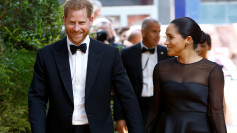
Prince Harry's effort to restore taxpayer-funded police protection in the U.K. is facing fresh resistance, with Home Office officials reportedly concerned that granting him full security would trigger public anger over the cost. The dispute has exposed a split inside Whitehall between political officials wary of backlash and security professionals said to believe the Duke of Sussex remains at serious risk.
Harry and Meghan lost automatic Metropolitan Police protection after stepping back from senior royal duties in 2020. Since then, Harry has relied on private security, estimated in the source material at about $3 million, or roughly £2.3 million, a year. His challenge to regain state-funded protection has become one of the most contentious unresolved issues of the Sussexes' break with the monarchy.
According to the source material, Harry lost a High Court challenge last year and later condemned the ruling as a "good old fashioned establishment stitch up." He also appealed to then-Home Secretary Yvette Cooper to review the matter "very, very carefully," while calling on the prime minister to intervene. Those efforts do not appear to have changed the government's position.
At the center of the battle is the Royal and VIP Executive Committee, or Ravec, which decides protection for royals and other high-profile figures. A Home Office source quoted by The Telegraph said: "There is nervousness among certain members of the committee who fear a public backlash." The same source added, "The political side believe there is too much political risk while the police and security chiefs believe that he absolutely must have it due to the extant threat."
That reported divide underscores the central tension in Harry's case. Security officials are said to view him as a continuing target because of his profile and military past, while political figures are weighing how it would look to ask taxpayers to fund protection for a royal no longer carrying out official duties.
Harry's lawyers have argued that his current arrangements are inadequate. In court, they said his "manifestly inferior" private security placed his life "at stake." They cited an incident in which a woman allegedly breached a protected area at one of his events and later came within a "stone's throw" of him at Imperial College London when only his private team was present.
Under the current system, Harry must give 30 days' notice before visiting Britain, after which his security needs are assessed on a case-by-case basis. Critics say that leaves too much uncertainty for someone whose movements can quickly become public.
The security dispute has also had personal consequences. Archie, 6, and Lilibet, 4, have not seen King Charles since the Platinum Jubilee in 2022, with Harry's inability to guarantee their safety in Britain widely seen as a major reason the family rarely returns.
A government spokesperson offered no fresh details, saying only: "The UK government's protective security system is rigorous and proportionate. It is our long-standing policy not to provide detailed information on those arrangements."