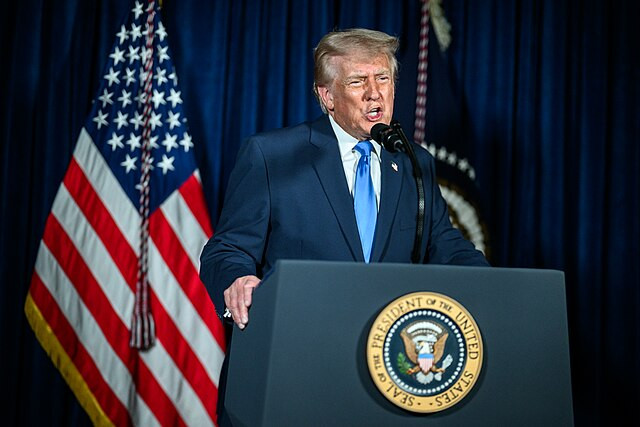
President Donald Trump declared a "100% victory" in the ongoing Iran conflict while asserting that negotiations are already underway, a claim immediately rejected by Iranian officials as airstrikes continued across the region and questions mounted about the accuracy of the administration's assessment.
Speaking publicly, Trump said "we are in negotiations right now" and added that "the other side would like to make a deal," presenting the situation as evidence that his strategy has forced Tehran into concessions. He further claimed Iranian representatives had "agreed they will never have a nuclear weapon," framing the moment as a turning point toward stability.
Those statements were quickly contradicted by Iranian officials. Ebrahim Zolfaqari, a spokesperson for the joint command of Iran's armed forces, dismissed the suggestion of talks, asking whether Trump's "inner struggle" had reached the point where he was "negotiating with yourself." He added that "people like us can never get along with people like you," signaling no immediate path toward direct engagement.
The gap between Washington's messaging and Tehran's response has intensified scrutiny among analysts and lawmakers, who say the situation on the ground remains fluid and far from resolved. Iran's foreign ministry has also rejected the notion of negotiations, citing past experiences in which diplomatic efforts were disrupted by military action and sanctions.
At the same time, hostilities have shown no sign of easing. Israel and Iran have continued exchanging airstrikes targeting locations including Tehran and sites linked to Iranian forces, contributing to volatility in energy markets and raising fears of a broader regional escalation. The persistence of military operations has complicated efforts to reconcile claims of progress with the reality of ongoing conflict.
Reports circulating among defense observers have added another layer of concern. Some units deployed in the region are said to be facing shortages of equipment or weapons supplies, though details remain limited. These reports have fueled criticism that declaring a decisive victory may be premature while operational challenges persist.
Supporters of the administration argue that sustained military pressure can create conditions for diplomacy, pointing to Trump's assertion that Iran is open to a deal. Critics counter that such claims echo earlier moments in which diplomatic breakthroughs were announced before being substantiated, raising questions about the strategic purpose behind the messaging.