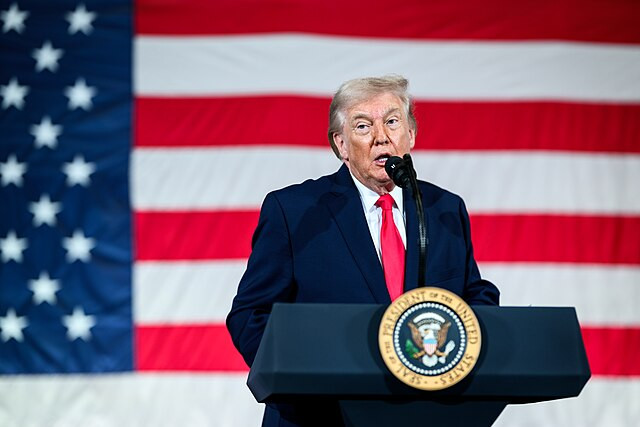
Donald Trump faced renewed scrutiny over his cognitive health after an Easter Sunday social media post about Iran drew criticism from medical commentators and lawmakers, with one physician publicly stating the president appeared to exhibit "all the signs of dementia" amid escalating geopolitical tensions involving the Strait of Hormuz.
The controversy erupted after Trump used his Truth Social platform to comment on a U.S. military rescue operation in Iran, combining a declaration of success with an aggressive warning to Tehran. In the same message, he urged Iran to reopen the strategic waterway and warned of severe consequences if it did not comply.
Observers focused less on the policy content than on the tone. The message included profanity, sweeping threats, and an unexpected religious phrase-"Praise be to Allah"-posted on Easter Sunday, a juxtaposition critics described as unusual given the context of the holiday and the sensitivity of the ongoing conflict.
The reaction intensified when Dr. Vin Gupta, a pulmonologist and media commentator, weighed in on social media. Gupta wrote that Trump appeared "erratic," struggled to complete sentences, and demonstrated an "illogical train of thought," adding that such behaviors were consistent with cognitive decline.
Gupta's comments quickly circulated across political and media channels. He later clarified that he had not examined Trump directly and was not offering a formal diagnosis, instead describing his assessment as an observation based on publicly visible behavior over time.
The episode fed into a broader and long-running debate over Trump's cognitive fitness, which has surfaced periodically during both of his presidential terms. Critics have pointed to instances of verbal misstatements, digressions during speeches, and perceived inconsistencies in messaging as potential indicators of decline.
Medical professionals, however, generally caution against drawing clinical conclusions without direct evaluation. Public commentary based on observed behavior, while influential in shaping perception, does not meet diagnostic standards.
Political reaction in Washington was swift. Senate Majority Leader Chuck Schumer described the remarks as "ranting," while Senator Bernie Sanders called them "dangerous." Senator Chris Murphy raised the possibility of constitutional implications, referencing mechanisms for addressing presidential incapacity.
Notably, criticism extended beyond Trump's traditional opponents. Representative Marjorie Taylor Greene, often aligned with the president, broke ranks publicly, stating he had "gone insane" and calling for intervention.