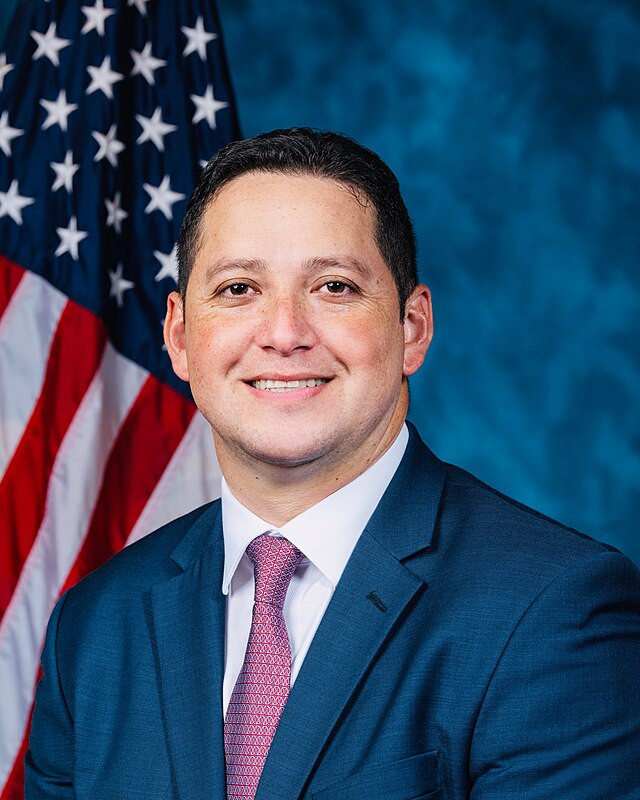
A fresh political crisis is unfolding in Washington as allegations involving Republican Rep. Tony Gonzales have triggered backlash within the GOP, intensifying pressure on Donald Trump and exposing fractures across the party's narrow congressional majority.
The controversy centers on reported messages sent by Gonzales to a campaign staffer, including one alleged text stating, "I know what I want and won't stop until I get it," according to accounts that have circulated widely among lawmakers and political observers. The allegations have prompted calls for resignation from members of his own party, marking a rare instance of internal Republican alignment on disciplinary action.
The episode arrives at a moment of heightened vulnerability for Republican leadership on Capitol Hill. With slim margins in the House and growing internal dissent, the party's ability to maintain cohesion has come under increasing strain, particularly as Trump's approval ratings have weakened in recent polling.
Republican lawmakers have moved quickly to distance themselves from the controversy. Nancy Mace publicly called for accountability, signaling that resignation should be considered. She was joined by Lauren Boebert and Tim Burchett, who have also urged Gonzales to step aside.
Burchett, speaking candidly about the allegations, said he "cannot stomach" the reported behavior and added that the lawmaker "needs to go." The language reflects the intensity of the reaction, particularly within a party that has often been reluctant to publicly rebuke its own members.
The allegations have been compounded by Gonzales' prior acknowledgment of a separate personal relationship involving a congressional aide, further amplifying scrutiny over his conduct. While reports indicate that no physical relationship occurred in the current case, the tone and persistence of the messages have drawn ethical concerns.
Beyond the immediate controversy, the situation carries broader political implications. Any resignation would reduce the GOP's already fragile House majority, complicating legislative strategy and weakening leadership's margin for error in closely contested votes.
Political analysts point to several structural pressures converging at once:
- Narrow House majority limiting leadership flexibility
- Declining presidential approval affecting party discipline
- Increased willingness among lawmakers to break with leadership
The scandal also underscores a shifting dynamic within Republican ranks. As electoral risks rise, lawmakers appear more willing to prioritize political survival over alignment with party leadership, particularly when controversies threaten to dominate the news cycle.
For Trump, the episode adds to a growing list of challenges in maintaining influence over Congress. The combination of internal dissent and public controversy has made party discipline harder to enforce, even as legislative priorities demand unity.