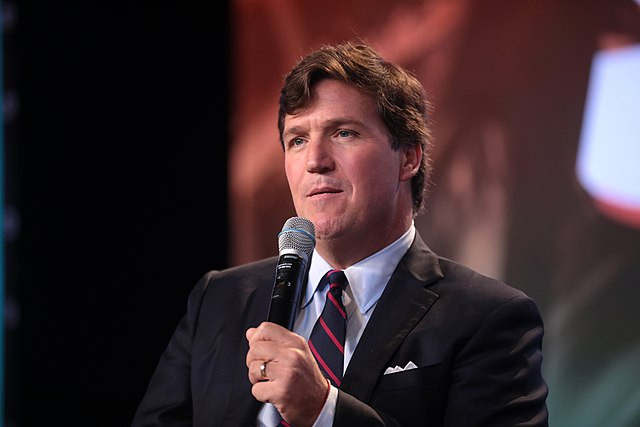
A public feud between Tucker Carlson and Donald Trump intensified this week after Carlson sharply criticized the president's Easter message referencing "Praise Allah," igniting a broader debate over religion, political rhetoric and the boundaries of public discourse.
The dispute, which unfolded on Carlson's podcast and across social media platforms, underscores a widening divide between two figures who once shared overlapping audiences and political alignment. The clash also reflects growing tensions within conservative circles over how faith is invoked in political messaging.
Carlson directly challenged Trump's tone and language, stating, "Who do you think you are? You are sending out messages like this on Easter morning and speaking in a way that disrespects faith itself." He argued that the message, posted during a major Christian holiday, crossed what he described as a fundamental line of respect for religion.
Expanding on his critique, Carlson framed the issue in broader theological terms. He said that faith reflects the understanding that "we are not in charge of the universe," positioning Trump's remarks as inconsistent with that principle. He added that "to mock other people's faith is to mock the idea of faith itself," suggesting the controversy extends beyond a single phrase.
At the center of the dispute is Trump's use of "Praise Allah" in a message addressing escalating tensions with Iran. The phrase quickly circulated online, drawing mixed reactions from political commentators, religious leaders and the public. Some viewed it as an attempt at cross-cultural language, while others questioned its appropriateness in an Easter context.
Carlson interpreted the wording as emblematic of what he sees as a broader erosion of seriousness in political communication about religion. His criticism was not limited to linguistic choices but extended to what he characterized as a pattern of rhetoric with wider implications.
The exchange escalated further when Trump responded by dismissing Carlson, reportedly calling him a "low IQ person," marking a notable deterioration in relations between the two figures. The back-and-forth highlights a shift from policy disagreements to increasingly personal critiques.
The episode arrives amid heightened geopolitical tensions involving Iran, amplifying the impact of messaging from senior political figures. Analysts note that statements made during periods of international conflict carry added weight, particularly when they intersect with religious language.
Within conservative and religious communities, the reaction has been divided. Supporters of Carlson argue that his comments reflect concern over maintaining respect for faith traditions, while critics contend that his use of terms such as "anti-Christ" introduces its own level of inflammatory rhetoric.