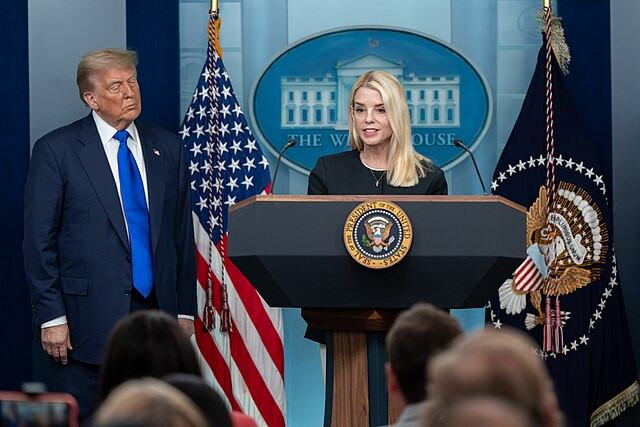
The absence of former Attorney General Pam Bondi from a scheduled deposition tied to the Jeffrey Epstein investigation has intensified scrutiny in Washington, after the U.S. Department of Justice argued that her removal from office nullifies the legal basis for compelling her testimony.
In a formal communication to the House Oversight Committee, the Justice Department said Bondi would not appear for the April 14 deposition because the subpoena had been issued in her official capacity while serving as attorney general. Assistant Attorney General Patrick Davis requested confirmation that the subpoena be withdrawn, stating that the legal obligation no longer applies now that she is no longer in office.
The explanation has drawn immediate pushback from lawmakers in both parties, who argue that Bondi's departure increases-not diminishes-the importance of her testimony. Members of the House Oversight Committee had approved the subpoena in a rare bipartisan vote amid growing concern over how Epstein-related materials were handled.
Representative Nancy Mace and Representative Ro Khanna have been among those insisting that accountability should extend beyond tenure in office. Democratic Congressman Robert Garcia escalated the warning, saying Bondi must testify "immediately" and cautioning that failure to comply could lead to contempt proceedings.
Committee officials confirmed they are now attempting to coordinate with Bondi's personal legal team to secure testimony outside her former official role, signaling a shift in strategy as lawmakers seek to preserve oversight authority despite the DOJ's position.
The dispute comes amid broader controversy surrounding the release and management of Epstein-related documents. Lawmakers have raised concerns about redactions that may obscure key figures, as well as reported errors that risk exposing victims' identities, turning the issue into a focal point of political and legal tension.
Bondi, who previously defended the department's approach in earlier hearings, now faces renewed scrutiny over her role in overseeing the handling of those materials. Her tenure at the Justice Department was marked by internal and external criticism, including disputes over prosecutorial decisions tied to high-profile investigations.
The timing of her dismissal by President Donald Trump has added a layer of political sensitivity. Critics have questioned whether her exit and subsequent absence from testimony are connected, though no direct evidence has been presented to substantiate those claims.
The Justice Department has maintained that it remains committed to cooperating with congressional oversight, but has emphasized that legal procedures must align with current roles and authorities. That position has not satisfied lawmakers who view Bondi's testimony as central to understanding decisions made during her tenure.