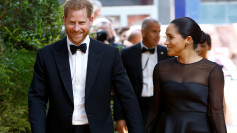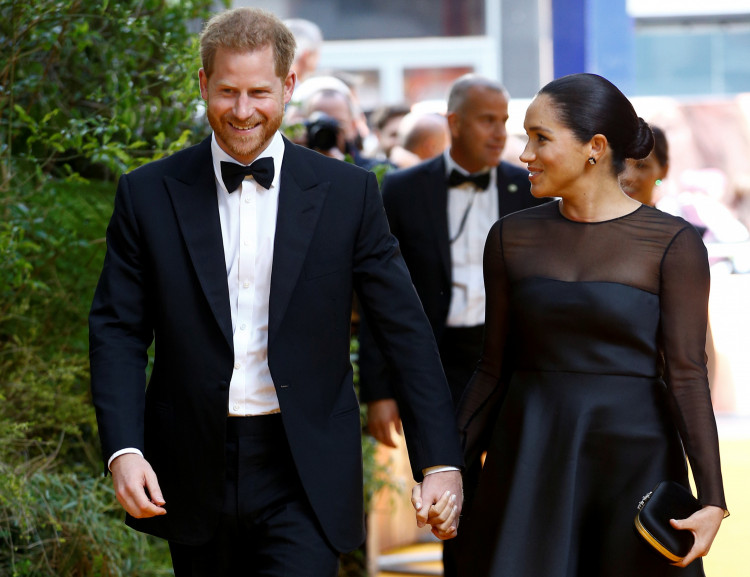
Prince Harry, the Duke of Sussex, intensified his public critique of the British monarchy during a keynote appearance in Australia, disclosing that his desire to abdicate his institutional responsibilities took root as early as age 12. Speaking Thursday at the InterEdge Summit alongside Meghan Markle, the Prince offered a granular timeline of his disillusionment, framing his departure from the United Kingdom not as a recent pivot, but as the culmination of a decades-long internal struggle.
The Duke's remarks to an audience of business leaders and former politician Brendan Nelson represent a significant hardening of his narrative regarding the royal "job." While his 2023 memoir, Spare, and various broadcast interviews have detailed the friction of his adult years, the Melbourne address focused on the immediate psychological aftermath of the 1997 death of his mother, Princess Diana.
According to People, the Duke of Sussex recalled that he was barely an adolescent when he first vocalized his rejection of the path ahead. "I don't want this job. I don't want this role - wherever this is headed, I don't like it," he stated. The Duke characterized this period as a fundamental turning point where the forensic details of a private tragedy became global property before he could process the loss.
Harry explicitly linked the constraints of the monarchy to the circumstances of his mother's death in Paris, suggesting the institution itself was a primary factor in the tragedy. He told attendees he believed his mother's royal role "got her killed," a realization he said fueled a prolonged period of adolescent resistance. "I was very much against it, and I stuck my head in the sand for years and years," he said.
The evolution of the Duke's perspective is detailed across several key milestones:
- 2017: Admitted to The Telegraph he was close to a "complete breakdown" after two decades of suppressed grief.
- 2020: Formal departure from frontline royal duties and relocation to Montecito, California.
- 2023: Publication of Spare, which alleged King Charles III referred to him as a "spare" at birth.
The Duke's admission that he felt "lost, betrayed or completely powerless" highlights the persistent friction between his public duties and private mental health. In Melbourne, he noted that the visibility of his mourning exacerbated the trauma. "In my experience, loss is disorienting at any age," he told delegates. "Grief does not disappear because we ignore it." He further observed that mourning "in a goldfish bowl under constant surveillance" has the potential to "break you."
Despite his early instinct to flee the institution, the Duke explained that a sense of duty, filtered through his mother's perceived legacy, kept him in the fold for twenty years. He described a shift in perspective driven by the question: "What would my mum want me to do?" This motivation allowed him to utilize his position to "make a difference in the world," even as his personal connection to the role remained fragile.
This long-term suppression of emotion had professional and personal costs. In his earlier interview with The Telegraph, the Duke noted: "I can safely say that losing my mom at the age of 12, and therefore shutting down all of my emotions for the last 20 years, has had a quite serious effect on not only my personal life but my work as well." He confirmed he eventually sought professional psychiatric help to manage the impact.
The Duke's current status remains one of relative estrangement from the core of the Royal Family following the serial release of his grievances through Netflix and his memoir. His Melbourne appearance suggests no inclination toward reconciliation with the working royal fold, instead reinforcing his position that the role he was born into was one he "never wanted."