Donald Trump and Erika Kirk triggered a fresh wave of political and cultural backlash after a brief onstage interaction at a Turning Point USA rally in Phoenix, highlighting how even minor gestures in high-profile political settings can rapidly escalate into broader controversies.
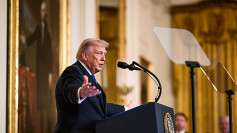
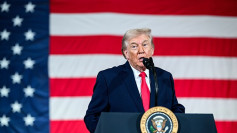
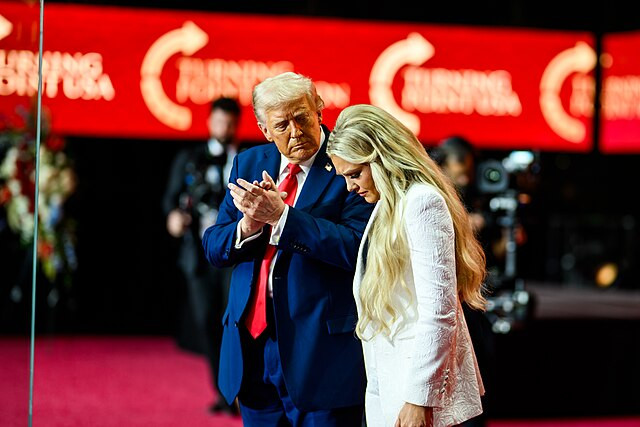
The moment occurred during the "Build the Red Wall" event hosted by Turning Point USA at Dream City Church, where Trump appeared alongside Kirk, who recently assumed a more prominent leadership role following the death of co-founder Charlie Kirk. As Kirk introduced Trump to the audience, he leaned in and kissed her on the cheek, drawing applause from attendees but sparking immediate scrutiny online.
Kirk's introduction underscored the political alignment between the two figures. "No matter what they throw at him, he perseveres in the face of adversity because the mission is too important," she told the crowd, adding that Trump was the person she would most want "on our side." The exchange reinforced a stage-managed alliance, but the physical gesture that followed quickly became the focal point of digital debate.
Online reaction fractured along familiar lines. Critics characterized the moment in sharply negative terms, with one user writing that it conveyed "the creepy uncle at Christmas vibes," while another added, "I think I'm going to be sick." A separate comment dismissed the moment as "hardly a kiss" before escalating into broader political criticism.
Supporters responded with equal intensity, framing the backlash as exaggerated. One user argued that "people these days have no life so they have to make up perverted things out of nothing," while another accused critics of selective outrage, writing that Trump was the "Best President in our lifetime!!!" The polarized response underscored how symbolic gestures in political contexts are often interpreted through pre-existing partisan lenses.
The controversy unfolded against a backdrop of heightened scrutiny surrounding Kirk herself. In recent weeks, she has faced a surge of online speculation and unverified allegations, creating an environment in which even routine public appearances are dissected in granular detail. None of those claims has been substantiated, but they have contributed to a volatile media landscape.
Security concerns have also compounded the situation. Days before the Phoenix rally, Kirk withdrew from a scheduled Turning Point USA event in Athens, where she was set to appear with Vice President JD Vance. Vance told attendees she had been "very worried" due to threats, though a subsequent assessment by the U.S. Secret Service found no credible threat to the event itself.
That discrepancy between perceived and verified risk has added another layer of ambiguity to Kirk's public positioning, reinforcing the sense that her appearances are shaped as much by security calculations as by political messaging. It also reflects broader tensions surrounding high-profile political events in an era of heightened digital and physical scrutiny.