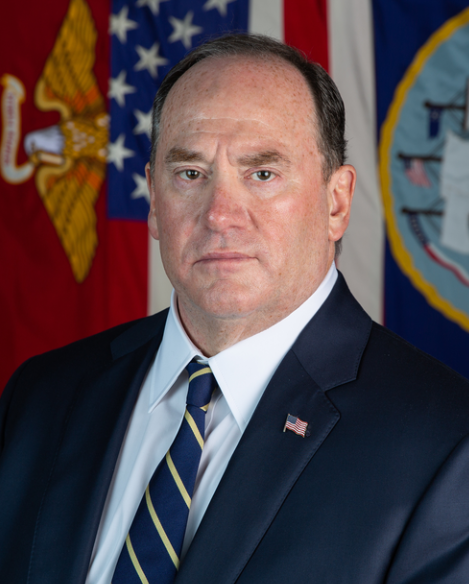
The Pentagon announced the immediate departure of John Phelan as Secretary of the Navy on April 22, 2026, a move that leaves unanswered questions about leadership stability at a critical moment for U.S. naval strategy under Donald Trump. The department confirmed that Hung Cao, previously the under secretary, will assume the role on an acting basis.
Chief Pentagon spokesman Sean Parnell disclosed the change in a public statement, saying, "Secretary of the Navy John C. Phelan is departing the administration, effective immediately," while adding that Cao would step in as acting secretary. The statement thanked Phelan for his service but offered no explanation for the abrupt exit.
The timing of the announcement has drawn scrutiny across defense and policy circles. Phelan had appeared publicly just one day earlier at the Navy's annual conference in Washington, addressing industry leaders, sailors and reporters on issues including shipbuilding and fleet expansion, without signaling any imminent transition.
Phelan's tenure had been defined by efforts to apply private-sector management principles to long-standing naval challenges. Confirmed by the Senate in March 2025 with a 62-30 vote, he entered the role from a finance background, having co-founded MSD Capital, a firm tied to Michael Dell's family investment operations.
His appointment initially stood out in a department traditionally led by individuals with military or defense policy credentials. At his confirmation, Phelan argued that his financial expertise could help address systemic inefficiencies, particularly in procurement timelines, cost overruns and shipbuilding delays-issues that continue to affect the Navy's long-term readiness.
The leadership transition now places Cao at the helm of one of the largest and most complex military organizations in the world. The Department of the Navy oversees nearly one million personnel across the Navy, Marine Corps and civilian workforce, a scale that underscores the operational significance of the shift.
Cao, confirmed as under secretary in October 2025, brings a markedly different profile to the position. A Naval Academy graduate and decorated combat veteran, his experience combines operational military service with recent administrative oversight, positioning him as both an insider and a bridge between military and civilian leadership structures.
The Navy faces a demanding agenda during this transition, including pressure to accelerate fleet expansion, modernize aging vessels and maintain readiness amid evolving geopolitical tensions. Earlier in 2026, Phelan had emphasized ambitions for a larger fleet and more efficient shipbuilding pipelines, priorities that now fall to Cao in an acting capacity.