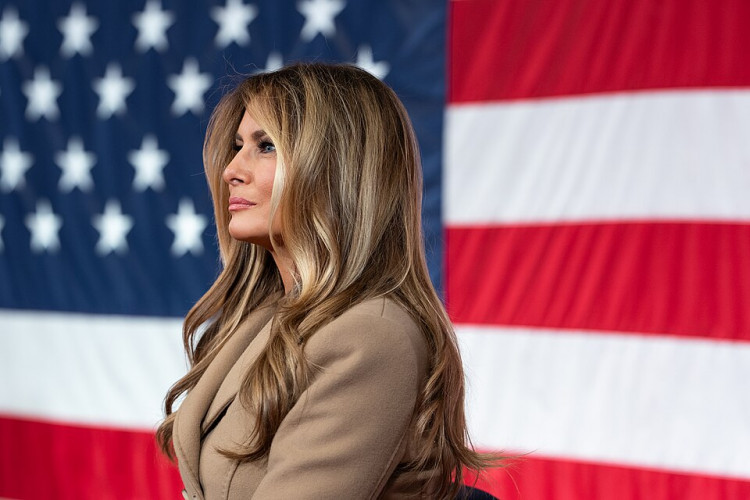
Melania Trump was absent from Donald Trump's high-profile state visit to China this week, with the White House confirming the First Lady would not accompany the president on a diplomatic trip that instead featured an unusual mix of cabinet officials, billionaire executives and members of the Trump family.
The absence immediately drew attention in Washington and Beijing after reporters covering the White House received an Air Force One passenger list for the 14-15 May visit that omitted Melania Trump entirely. In her place, Eric Trump and Lara Trump appeared alongside senior administration figures traveling to meet Chinese officials during one of the most geopolitically sensitive foreign trips of Trump's second term.
In a brief statement provided to US media outlets, a White House spokesperson said: "First Lady Melania Trump is not traveling this time." Officials did not provide further details regarding scheduling, security or health considerations, and no alternative public appearances for the First Lady were announced.
The contrast with Trump's previous state visit to China in 2017 was striking. During that earlier trip, Melania participated prominently in the diplomatic choreography arranged by Beijing, appearing alongside Peng Liyuan at schools, cultural events and formal ceremonies designed to showcase ties between the two countries.
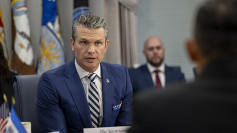
This week's delegation projected a different image. According to lists circulated by NewsNation White House correspondent Libbey Dean and other reporters, the president traveled with senior administration officials including Marco Rubio, Pete Hegseth and adviser Stephen Miller, alongside longtime Trump aides Steven Cheung, Walt Nauta and others.
The White House also assembled an unusually heavyweight business contingent, underscoring how heavily the administration wants to frame the visit around trade and investment despite escalating tensions involving Iran and global energy markets.
Among the executives joining the broader delegation were:
- Tim Cook of Apple
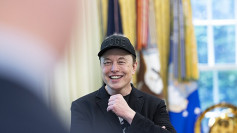
- Elon Musk of Tesla and SpaceX
- Larry Fink of BlackRock
- Stephen Schwarzman of Blackstone
- David Solomon of Goldman Sachs
- Jane Fraser of Citigroup
Administration officials said discussions in Beijing are expected to focus on trade frameworks, investment cooperation and broader economic coordination between the world's two largest economies.
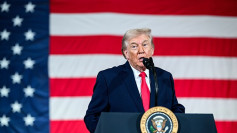
Before departing Washington, Trump described Chinese President Xi Jinping as a "friend" and previewed what he called an "exciting trip." He also signaled that talks would extend well beyond commerce into regional security concerns involving Iran and the Strait of Hormuz.
"We're going to be talking with President Xi about a lot of different things. I would say more than anything else will be trade," Trump told reporters before boarding Air Force One.
The president struck a far sharper tone when discussing Tehran. "It might be. I don't think we need any help with Iran," Trump said when asked whether Xi could assist in negotiations involving the ongoing US-Iran standoff. "They're defeated militarily, and they'll either do the right thing or we'll finish the job."
Trump has spent recent days warning that the fragile ceasefire arrangement surrounding Iran is "on life support" while pressing Beijing, a major purchaser of Iranian oil, to apply more pressure on Tehran.
When Air Force One landed in Beijing, Chinese officials rolled out a carefully choreographed welcome ceremony. Pool reports described hundreds of schoolchildren lining the tarmac waving American and Chinese flags while chanting greetings in Mandarin as Trump descended the aircraft beside Chinese Vice-President Han Zheng.