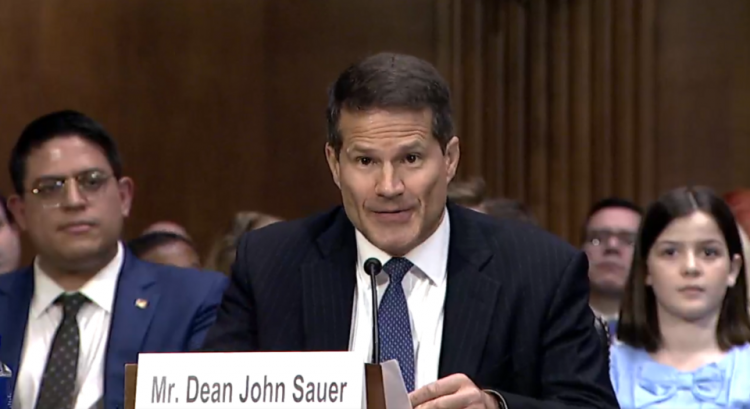
Donald Trump's solicitor general D. John Sauer has rapidly become one of the most influential legal figures shaping the direction of the Supreme Court of the United States, advancing an expansive theory of presidential authority that is already reshaping major disputes involving immigration, tariffs, federal agencies and voting rights.
Sauer, once best known nationally as Trump's personal attorney during the former president's legal battles, now occupies one of the most consequential positions in Washington legal circles. From the solicitor general's office, he is carrying the administration's arguments directly before a conservative Supreme Court majority that has shown increasing openness to claims favoring stronger executive authority.
The shift marks a notable departure from the traditional image of the solicitor general as the restrained "Tenth Justice," a role historically associated with institutional caution and legal credibility rather than ideological confrontation.
Former solicitor general's office attorney Roy Englert said Sauer has been "more aggressive than in the first Trump term or prior Republican or Democratic administrations," reflecting what many legal observers see as a broader transformation inside the Justice Department under Trump's second presidency.
That transformation is playing out in some of the country's most politically charged cases. Sauer has argued repeatedly that the Constitution grants the president broader control over federal agencies and national policy than courts and Congress have historically allowed.
In one especially striking courtroom moment, Sauer described independent federal agencies as "a decaying husk with bold and particularly dangerous pretensions," language that stunned some court watchers because of its unusually blunt attack on the administrative state.
Supporters of Sauer's legal strategy argue that his approach restores constitutional clarity by strengthening presidential accountability. Critics contend the arguments amount to an attempt to weaken institutional checks on executive power.
CNN analyst Joan Biskupic noted during recent Supreme Court arguments that conservative justices have at times appeared eager to reinforce Sauer's constitutional framing when liberal members of the court challenged him aggressively.
During one exchange, Brett Kavanaugh stepped in while Sonia Sotomayor pressed Sauer over presidential authority claims, redirecting the discussion toward the administration's broader constitutional arguments.
The administration's tariff disputes have become another testing ground for Sauer's legal philosophy. Defending Trump's trade powers before the justices, Sauer warned that limiting executive tariff authority could expose the United States to "ruthless trade retaliation" and leave the country vulnerable to "an economic and national security catastrophe."
The solicitor general's office has also taken controversial positions in voting-rights litigation. In Louisiana v. Callais, the Justice Department withdrew support for two Black-majority congressional districts, a reversal that intensified accusations from critics that the administration is actively seeking to reshape election law through the courts.
Elena Kagan criticized aspects of the legal framework advanced by Sauer's office during arguments, while Samuel Alito responded that the court merely needed to "update the framework."
The exchanges highlighted the increasingly ideological tone surrounding the court's current term, where questions about presidential authority, agency independence and election law are colliding simultaneously.
Before joining the administration, Sauer played a direct role in Trump's personal legal defense, including litigation connected to the Supreme Court's landmark presidential immunity ruling. He also worked on legal challenges tied to the aftermath of the 2020 election, cementing his reputation as one of Trump's most trusted courtroom advocates.
That background has fueled criticism that the solicitor general's office is becoming more politically aligned with Trump's broader agenda than in previous administrations. Yet allies argue Sauer is doing exactly what the administration elected him to do: aggressively defend presidential power against what they view as judicial and bureaucratic overreach.
The current Supreme Court term, expected to end by July, still includes several pending rulings touching directly on issues Sauer has championed. Those cases involve immigration enforcement, federal agency authority, election rules and the scope of presidential control over the executive branch.