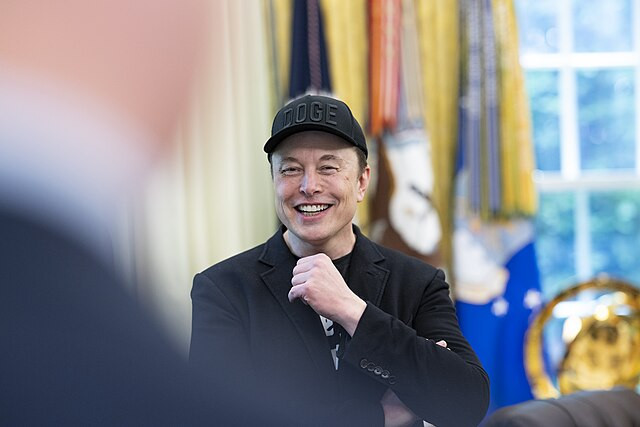
Elon Musk suffered a major legal defeat Monday after a federal jury in Oakland found that OpenAI and its leadership could not be held liable in a closely watched lawsuit challenging the company's transformation from a nonprofit research lab into one of the world's most valuable artificial intelligence businesses.
The unanimous verdict handed a significant victory to OpenAI chief executive Sam Altman, president Greg Brockman and investor Microsoft, while reinforcing the legal protections surrounding OpenAI's controversial restructuring as the company continues expanding aggressively across the AI industry.
Jurors deliberated for less than two hours before concluding that Musk had waited too long to bring his claims under California law. The ruling centered not on whether OpenAI abandoned its original mission, but on whether Musk filed his lawsuit within the legally permitted timeframe.
U.S. District Judge Yvonne Gonzalez Rogers accepted the jury's findings immediately, stating there was substantial evidence showing Musk had long been aware of OpenAI's plans to pursue a for-profit model before filing suit in 2024.
The lawsuit had become one of Silicon Valley's most closely watched courtroom battles because it struck directly at the future governance of artificial intelligence companies. Musk, who co-founded OpenAI in 2015 and helped finance its early development, accused Altman and Brockman of betraying the organization's founding principles.
According to court filings, Musk argued OpenAI was originally created as a nonprofit dedicated to developing artificial intelligence "for the benefit of humanity" rather than private commercial gain. He claimed executives violated that understanding by restructuring the company in ways that allowed enormous outside investment and potential personal enrichment.
The case carried enormous financial implications. Reports cited during the proceedings suggested the dispute involved damages potentially approaching $150 billion as OpenAI's valuation surged during the AI boom.
Testimony during the three-week trial revealed longstanding tensions between Musk and OpenAI leadership over control, funding and strategic direction. Lawyers for OpenAI argued the company's structural evolution was essential to compete against rivals such as Google in the increasingly expensive race to develop advanced AI systems.
OpenAI defended the transition as necessary to attract capital, engineering talent and computing infrastructure at a scale impossible under a purely nonprofit framework. The company also argued Musk himself had once advocated for more aggressive growth strategies before eventually distancing himself from the organization.
The jury ultimately never reached the deeper philosophical dispute over whether OpenAI abandoned its original mission. Instead, the decision turned almost entirely on the statute-of-limitations argument advanced by OpenAI's legal team.
NBC News reported that California law generally requires claims involving charitable trust disputes and unjust enrichment to be filed within two to three years after plaintiffs become aware of the alleged misconduct. Jurors concluded Musk had known about OpenAI's direction far earlier than his lawsuit claimed.
The outcome represents a major strategic win for OpenAI at a pivotal moment for the artificial intelligence industry. The company has become one of the dominant forces shaping generative AI technology following the success of ChatGPT and related products, while simultaneously facing mounting scrutiny from regulators, investors and competitors.
An adverse ruling could have destabilized OpenAI's corporate structure just as the company explores additional expansion and potential public-market ambitions.
Musk's legal team signaled quickly that the fight is not finished. According to reports following the verdict, one attorney said the "war is not over" and confirmed plans to appeal the decision.