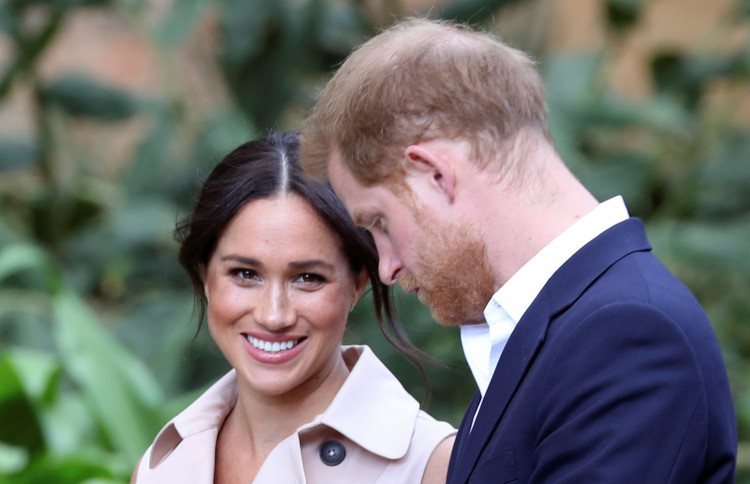
Meghan Markle and Prince Harry are facing renewed criticism from royal commentators who argue the couple's increasingly high-profile overseas appearances resemble the very "half-in, half-out" arrangement that Queen Elizabeth II explicitly rejected when the Sussexes stepped back from royal duties in 2020.
The latest debate erupted following the couple's recent visit to Australia, where public walkabouts, staged engagements, media coverage and charitable appearances prompted critics to describe the trip as a "fake royal tour" designed to strengthen the Sussex brand while capitalizing on the couple's royal identity.
The accusations reopen one of the monarchy's most sensitive unresolved tensions: whether Harry and Meghan can ever fully separate private commercial ambitions from the symbolic power attached to their royal titles.
When the Duke and Duchess of Sussex negotiated their exit from frontline royal life during the Sandringham Summit in January 2020, they proposed maintaining selective royal duties while simultaneously pursuing independent commercial projects in North America.
The late Queen ultimately rejected the arrangement.
Buckingham Palace at the time made clear that working royal responsibilities could not coexist with private business ventures because the monarchy's institutional credibility depended on political neutrality and the avoidance of perceived personal profiteering.
Six years later, critics argue the practical distinction has become increasingly blurred.
Royal commentator Hilary Fordwich told Fox News that what Queen Elizabeth viewed as "totally and utterly unacceptable" now appears to define the Sussexes' public operating model.
Fordwich claimed "each trip they make is styled to be rather like a faux royal tour" and argued the couple appear to "monetise almost every moment."
The criticism reflects broader frustration among some royal observers who believe Harry and Meghan continue leveraging royal symbolism despite no longer representing the Crown officially.
Their recent Australia appearances intensified those concerns because the optics closely resembled traditional royal overseas visits: formal greetings, carefully choreographed public interactions, charitable events and extensive media attention.
Supporters of the Sussexes, however, argue the criticism ignores the realities of modern philanthropy and celebrity advocacy.
Since leaving royal duties, Harry and Meghan have increasingly operated through Archewell Foundation and other independent ventures, where visibility and media exposure are often central to fundraising, awareness campaigns and public engagement.
The couple's defenders also note that global fascination with royal figures makes intense coverage unavoidable regardless of how private or restrained the Sussexes attempt to remain.
Still, the overlap between public advocacy and commercial branding remains difficult to separate entirely.
Royal commentator Richard Fitzwilliams argued there remains "a major difference" between official royal tours conducted on behalf of the monarchy and the Sussexes' independent appearances. Yet he acknowledged the couple's extraordinary publicity power continues to drive global attention.
That publicity has become inseparable from the Sussex business model.
Since relocating to the United States, Harry and Meghan have built a portfolio spanning streaming content, publishing, speaking engagements, charitable initiatives and lifestyle branding. Harry's memoir Spare became one of the most commercially successful royal books in history while simultaneously deepening tensions with the royal household.
The continued use of their Duke and Duchess titles, combined with public appearances rooted in humanitarian causes, has left critics arguing that the Sussexes still rely heavily on the institutional prestige they officially stepped away from.
Prince Harry himself appeared to reinforce that perception during an unannounced trip to Ukraine last month.
"I will always be part of the royal family ... I am here working and doing the things I was born to do," Harry said during the visit.