Global markets turned volatile Tuesday after the United States launched fresh military strikes against Iran, reigniting concerns about Middle East stability and prompting renewed warnings from Bank of America that U.S. equities may be approaching a dangerous inflection point.
Oil prices surged, stocks struggled for direction, and investors reassessed risk exposure after U.S. Central Command confirmed new military action following the downing of a U.S. Apache helicopter near the Strait of Hormuz. The developments added pressure to markets that had already been grappling with elevated valuations, geopolitical uncertainty, and signs of slowing momentum across several sectors.
Brent crude rose as much as 2% to trade above $93 a barrel, while West Texas Intermediate climbed to approximately $90. The gains came after U.S. Central Command described the latest military operation as a "proportional response" to Iranian actions.
In a brief statement, U.S. Central Command said the "self-defense strikes" were conducted in response to what it called unjustified Iranian aggression. Iranian state media reported that Qeshm Island, located in the strategically important Strait of Hormuz, was among the areas targeted.
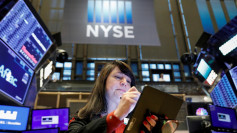
The renewed military escalation immediately reverberated through financial markets. The S&P 500 slipped 0.2%, while the Nasdaq Composite dropped more than 1.1%, weighed down by technology shares. The Dow Jones Industrial Average managed a modest gain of 0.1%, reflecting investor rotation into more defensive sectors.
Commodity markets delivered a mixed signal. While oil advanced sharply, gold continued a surprising retreat despite the geopolitical turmoil. Bullion declined 1.3% to roughly $4,205 per ounce, extending losses that have left the precious metal nearly 20% below levels seen before the Middle East conflict intensified in late February.
Market strategists noted that gold's break below its 200-day moving average has accelerated technical selling. The level is closely monitored by institutional investors and algorithmic trading systems, making breaches particularly significant for short-term market sentiment.
Against this backdrop, Bank of America issued a cautionary assessment of U.S. equities, arguing that several warning signs historically associated with market peaks have begun flashing simultaneously.
In a research note to clients, BofA said seven of its ten major "bear market signposts" have now been triggered.
The indicators cited by the bank include:
- Consumer confidence trends
- Stock price expectation measures
- Credit stress conditions
- Merger-and-acquisition activity
- Long-term earnings growth forecasts
- Credit tightening indicators
- Relative performance of speculative stocks
According to BofA, five warning signals emerged during April alone, with two additional indicators turning negative in May.
The bank highlighted growing speculative behavior across equity markets. Its "cheap versus expensive stock" gauge showed high price-to-earnings stocks significantly outperforming lower-valued companies, which BofA described as "a sign of excessive speculation."
Valuation concerns are becoming increasingly difficult for investors to ignore. Although the S&P 500 has advanced roughly 8% this year, Bank of America noted that the index is "statistically expensive on 17 of 20 metrics, and trades rich versus its tech bubble metrics on eight."
The firm also pointed to emerging cracks in technology-sector fundamentals. While today's largest technology companies remain far stronger financially than many firms during the dot-com era, several key indicators are moving in the wrong direction.
BofA cited weakening cash-flow conversion rates, declining share repurchases relative to market capitalization, and rapidly rising capital expenditures among hyperscale cloud providers. The bank warned that capital spending as a percentage of operating cash flow could approach 100% by the end of 2026 for some major technology companies.
"Extreme price action may signal rising instability. We see opportunity in S&P 500 stocks, but not the overall cap-weighted index," BofA stated.