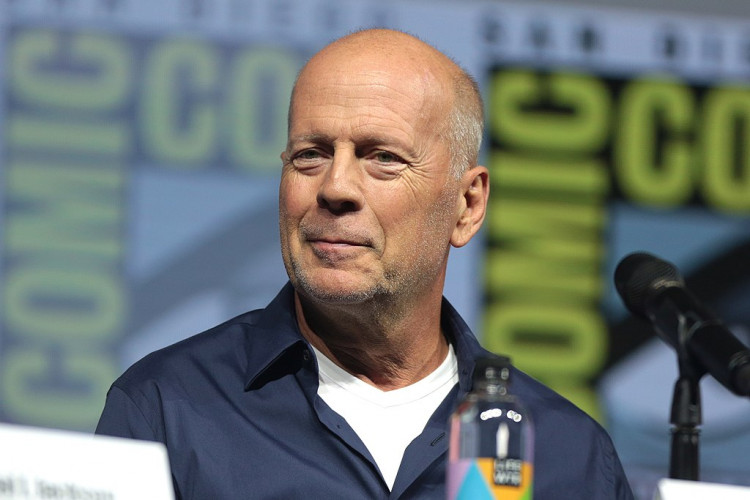
Bruce Willis' wife, Emma Heming Willis, is pushing back against a common misconception surrounding the actor's health, saying the Hollywood star still recognizes his family despite living with frontotemporal dementia, or FTD.
Speaking on The Bossticks podcast, Heming Willis addressed recurring public questions about the condition of the 69-year-old actor, whose family announced his FTD diagnosis in 2023 after revealing a diagnosis of aphasia a year earlier. Her comments offered a rare update on Willis' health while drawing attention to the differences between FTD and Alzheimer's disease.
One of the questions she says she hears most often concerns whether Willis still recognizes those closest to him. Heming Willis said that assumption stems from a broader misunderstanding about dementia.
"When people say, 'Oh, you know, does he remember who you are?' Well, he does because he doesn't have Alzheimer's; he has FTD," she said on the podcast.
The clarification comes as public awareness of frontotemporal dementia continues to lag behind that of Alzheimer's disease. While Alzheimer's is widely associated with memory loss, medical experts say FTD primarily affects behavior, personality, communication and decision-making skills during its earlier stages.
"I think that's a very common misconception that, when you think of dementia, we think of memory loss," Heming Willis said.
Health organizations including the NHS describe frontotemporal dementia as a progressive neurological disorder that mainly impacts the frontal and temporal regions of the brain. Unlike Alzheimer's, which often begins with memory impairment, FTD can first appear through personality changes, language difficulties and altered social behavior.
Heming Willis emphasized that the distinction matters, particularly because FTD frequently affects younger patients. "FTD is the most common form of dementia for people under the age of 60," she said, noting that many families are forced to confront the disease long before retirement age.
Her remarks also shed light on the emotional burden carried by caregivers. Reflecting on her family's experience since Willis' diagnosis, she described a continuing cycle of loss and adaptation.
"What you experience with any form of dementia is it just takes," Heming Willis said. "You know, these diseases, they take and they take and they take, sometimes very slowly, and you are grieving different losses all the time."
She added that while the challenges have not eased, she has learned to live alongside them. Heming Willis said she has become more accustomed to the realities of caregiving and is "just sitting with it and moving alongside of it."
The conversation follows public scrutiny surrounding decisions made about Willis' care. In 2025, Heming Willis defended her choice to move the actor into a single-story residence supported by a full-time care team as his condition progressed.
During the ABC special Emma & Bruce Willis: The Unexpected Journey, she explained the move was made with both Willis and their daughters in mind. "He would want them to be in a home that was more tailored to their needs, not his needs," she told journalist Diane Sawyer. She described the transition as the "hardest decision" she has had to make.
Heming Willis has since become an outspoken advocate for caregivers, frequently using social media and interviews to discuss the realities of supporting loved ones with neurodegenerative diseases. Following criticism online, she argued that many judgments come from people unfamiliar with the daily demands families face.
"Too often, caregivers are judged quickly and unfairly by those who haven't lived this journey or stood on the front lines of it," she wrote on Instagram.
She later explained that sharing her family's experience is intended to help others facing similar challenges. "That's who I share for and so I can build a deeper connection with a community that understands this journey," she said.