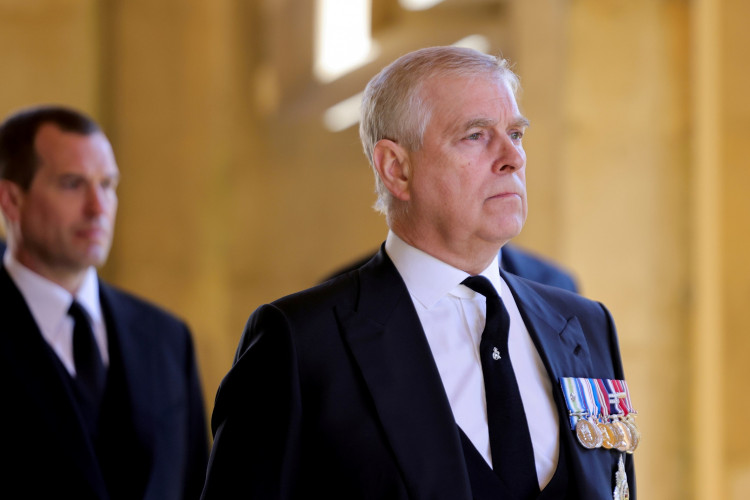
Prince Andrew's absence from two of the British monarchy's most prominent ceremonial events has reignited scrutiny of his standing within the Royal Family, with recent reports suggesting the Duke of York remains largely sidelined years after the fallout from his association with convicted sex offender Jeffrey Epstein.
The 66-year-old royal was not present at this year's Trooping the Colour celebrations in London or the Order of the Garter ceremony at Windsor Castle, two events that once featured him prominently as a senior working member of the monarchy. His continued exclusion has fueled speculation that King Charles III has no intention of easing the restrictions placed on his younger brother.
According to the Daily Express, citing an unnamed source, Andrew has found his exclusion from the Order of the Garter particularly difficult. The annual ceremony, regarded as one of the monarchy's most prestigious traditions, was reportedly among his favorite royal engagements.
"He's become used to watching his family celebrate Trooping [the Colour] without him, but Garter Day will be a really tough day for him," the source told the publication. "It's one of those days that reminds him of all that he's lost. He's feeling more isolated than ever; he's completely alone."
The latest reports underscore how dramatically Andrew's public role has changed since his widely criticized 2019 BBC Newsnight interview, which focused on his friendship with Epstein. In the years that followed, he withdrew from public duties and lost his military affiliations and royal patronages.
His position weakened further after King Charles streamlined the monarchy and distanced the institution from controversies that could overshadow the reign. Andrew has not returned to official royal duties, and Buckingham Palace has consistently declined to signal any path back.
Beyond ceremonial events, reports suggest the duke's personal circumstances have also shifted. He no longer resides at Royal Lodge, the Windsor property he occupied for years, and has reportedly relocated to a smaller residence on the Sandringham estate.
That move has been interpreted by royal commentators as more than a housing change. For many observers, it symbolized a broader effort to reduce Andrew's visibility within royal life while preserving a degree of family support behind the scenes.
Questions surrounding Andrew's future have resurfaced alongside new reporting regarding a February arrest linked to allegations concerning his time as the United Kingdom's trade envoy. However, no charges have been detailed in the material provided, and the status of any investigation remains unclear. Those claims remain unverified and should be treated cautiously.
His absence from family occasions has also attracted attention. Reports indicated Andrew did not attend the recent wedding of Peter Phillips, son of Princess Anne. While the event was private and no official explanation was offered, royal watchers have viewed the omission as another sign of his shrinking role within family gatherings.
Insight into Andrew's personal mindset has emerged through royal historian Andrew Lownie's updated book, Entitled: The Rise and Fall of the House of York. According to Lownie, Andrew expressed deep regret over the impact the Epstein scandal had on those closest to him.
"It's been very hard to deal with. The hardest thing was how it affected my family and put so much burden on them. For that, I'm sorry beyond words, and unfortunately, will have to bear that regret for the rest of my life," Andrew is quoted as saying.
Lownie also reported that Andrew described his world as having been transformed by the controversy. He allegedly spoke of "a deep-rooted sense of being alone in the world" and acknowledged the need to "establish new routines and networks."
Another reported remark reflected his continued belief that public perceptions of him remain unfair. "I've been completely misunderstood, and I'm hopeful that one day the naked truth will finally let out," he reportedly told a former staff member.