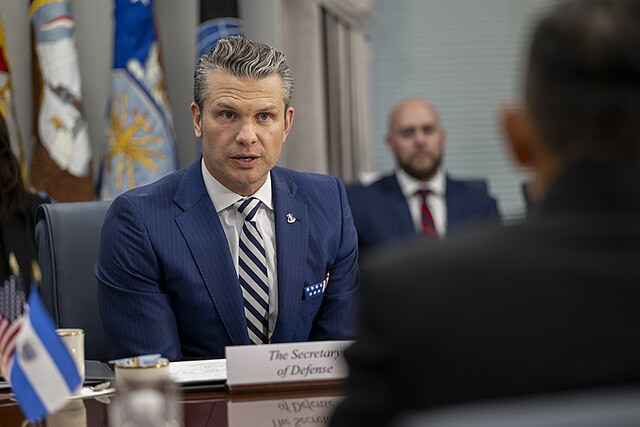
A flu outbreak that has sickened nearly 160 Air Force trainees at Lackland Air Force Base in Texas is drawing renewed scrutiny to Defense Secretary Pete Hegseth's decision to end the military's long-standing requirement for annual influenza vaccinations, placing questions of military readiness and public health at the center of a growing political debate.
The outbreak occurred at Lackland Air Force Base in San Antonio, the primary training center for new Air Force recruits. Defense officials said the virus spread through a training wing where recruits live, train and eat in close proximity, conditions that have historically made military installations vulnerable to infectious disease outbreaks.
The incident has taken on added significance because it emerged less than two months after Hegseth announced that flu vaccinations would become voluntary for service members. The policy change marked a significant departure from years of Pentagon practice and reflected a broader effort by the Trump administration to expand personal choice regarding medical decisions.
The outbreak also coincided with the death of trainee Keon McDaniel, who became ill during his sixth week of training and was later transferred to Brooke Army Medical Center. Air Force officials have not confirmed whether his death was related to the flu outbreak, and an investigation remains ongoing.
When announcing the policy change in April, Hegseth framed the decision as a matter of personal liberty and religious freedom.
"Under the disastrous Biden administration, this Pentagon waged an unrelenting war on our warriors on many fronts, including when it came to denying them simple medical autonomy and the freedom to express their religious convictions," Hegseth said in a video message unveiling the new rules.
Hegseth also criticized the previous requirement, describing the mandatory flu vaccination program as an "absurd, overreaching" policy. At the same time, he encouraged service members to continue receiving vaccinations voluntarily.
"We will not force you because your body, your faith and your convictions are not negotiable," Hegseth said.
According to an Air Force official, participation rates dropped significantly after the mandate was lifted, with only about 40% of trainees opting to receive flu shots. As infections increased, military officials moved quickly to contain the outbreak and ultimately carved out an exception to the Pentagon's new policy.
The Air Force has now reinstated mandatory flu vaccinations for recruits at Lackland as part of its response effort. Officials have also increased medical monitoring and administered antiviral treatments to exposed trainees.
"Once they are cleared by medical professionals, they will return to training," the Air Force said in a statement.
The outbreak has reignited a longstanding debate within military circles over the balance between individual choice and operational readiness. Military leaders have traditionally viewed vaccination programs as a force-protection measure designed to minimize disruptions to training and deployment schedules.
Among the most vocal critics of the policy change was Senator Roger Wicker, the Republican chairman of the Senate Armed Services Committee and an Air Force veteran.
"The reason it was mandatory was to enhance readiness," Wicker said shortly after Hegseth announced the change.
"You know, you do give up certain rights when you take the oath. It's just part of it."
Pentagon officials continue to defend the broader policy shift. Sean Parnell, the department's chief spokesman, said changes to vaccination requirements were made following reviews aimed at maximizing military effectiveness while respecting service members' personal convictions.
The dispute also reflects broader national debates surrounding vaccine policy. Since taking office, Hegseth has prioritized reversing several vaccine-related initiatives, including efforts to restore benefits, rank and back pay to service members who left the military after refusing COVID-19 vaccinations.
Pentagon data show that roughly 8,700 active-duty and reserve personnel departed military service after declining the COVID vaccine before that mandate was rescinded in 2023. Yet only 13 had returned to service as of last year.
While mandatory flu shots became optional under Hegseth's directive, numerous vaccination requirements remain in place throughout the armed forces. Service members are still required to receive immunizations against diseases such as measles, mumps and polio, while additional vaccines may be mandated depending on deployment locations and mission requirements.