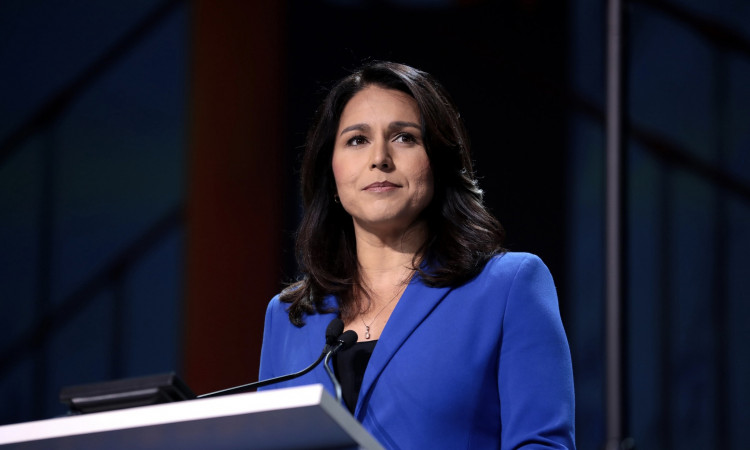
Director of National Intelligence Tulsi Gabbard used one of her final acts in office to reignite one of the most contentious debates of the COVID-19 era, releasing declassified documents that accuse Dr. Anthony Fauci of helping fund research at the Wuhan Institute of Virology and influencing how the U.S. government handled questions about the pandemic's origins.
The document release, published by the Office of the Director of National Intelligence on June 18, came just days before Gabbard's scheduled departure from the Trump administration. The outgoing intelligence chief framed the disclosure as part of a broader effort to increase transparency surrounding COVID-19 and the government's response to the pandemic.
In a statement accompanying the release, Gabbard's office alleged that Fauci played a central role in supporting coronavirus research conducted through grants awarded to EcoHealth Alliance, which collaborated with researchers at the Wuhan Institute of Virology before the outbreak emerged in China.
Gabbard amplified the release on social media, telling the public, "It's time you know the truth."
The newly released materials include internal communications, intelligence assessments, whistleblower allegations and previously classified records related to debates inside the U.S. government over whether COVID-19 originated naturally or resulted from a laboratory-related incident.
At the center of the controversy is a federal grant awarded through the National Institute of Allergy and Infectious Diseases, which Fauci led for decades. The grant funded research conducted by EcoHealth Alliance, with a portion of the work subcontracted to the Wuhan Institute of Virology.
Whether that research constituted gain-of-function experimentation has remained fiercely disputed. Critics argue the work increased the capabilities of coronaviruses and created unacceptable risks. Fauci and other defenders have maintained that the research did not meet the federal definition of gain-of-function studies subject to additional oversight requirements.
Appearing before congressional investigators in 2024, Fauci rejected allegations that the National Institutes of Health funded gain-of-function research that created the virus responsible for the pandemic.
The latest release seeks to challenge that narrative, arguing that newly declassified communications raise questions about earlier public statements and internal discussions concerning Wuhan-related research activities. Gabbard's office also said certain whistleblower allegations have been referred to the Intelligence Community Inspector General.
The disclosure arrives against the backdrop of a scientific and intelligence debate that remains unresolved more than six years after the pandemic began.
U.S. intelligence agencies have never reached a unified conclusion regarding COVID-19's origins:
- The FBI has favored a laboratory-related explanation with varying levels of confidence.
- The Department of Energy has also leaned toward a laboratory incident.
- Several intelligence agencies and the National Intelligence Council have assessed that a natural origin remains more likely.
- The CIA shifted in 2025 to a low-confidence assessment favoring a research-related origin while continuing to state that both scenarios remain plausible.
Among the documents highlighted by Gabbard's office is a May 2020 assessment from Lawrence Livermore National Laboratory. According to the released materials, analysts considered both a laboratory accident and natural transmission viable explanations during the early months of the pandemic.
The records also revisit longstanding concerns about cooperation between the Wuhan Institute of Virology and Chinese military-linked research programs. Previously declassified intelligence reports noted collaboration between the laboratory and elements of China's military research establishment before the pandemic emerged.
However, intelligence agencies have largely agreed on one significant point: there is no evidence that SARS-CoV-2 was engineered as a biological weapon. Multiple government reviews have also concluded that the virus was not deliberately released.