Russian-installed authorities in Crimea have suspended civilian gas sales indefinitely after a series of Ukrainian strikes targeted fuel and energy infrastructure across the occupied peninsula and deep inside Russian territory, highlighting Kyiv's growing ability to disrupt assets critical to Moscow's war effort.
The decision, announced by Crimea's Kremlin-appointed leader Sergey Aksyonov, comes as Ukraine intensifies long-range attacks against oil depots, refineries and logistics facilities that support Russian military operations. The latest wave of strikes has contributed to what observers describe as the most severe energy disruption in Crimea since Russia seized the peninsula in 2014.
Aksyonov said recent attacks left four people dead and dozens injured. In response, authorities halted gas sales to private individuals and non-state businesses.
The measure, he said, was necessary to "ensure the functioning and security of the Republic of Crimea."
The announcement underscores how Ukraine's strategy has evolved beyond frontline combat. Rather than focusing exclusively on battlefield positions, Kyiv has increasingly sought to degrade Russia's ability to sustain military operations by targeting fuel supplies, transportation hubs and energy facilities far from active combat zones.
According to the Associated Press, Ukrainian strikes against fuel infrastructure in Crimea have intensified in recent weeks, creating mounting pressure on local authorities responsible for maintaining energy supplies throughout the occupied territory.
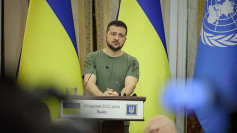
Ukrainian President Volodymyr Zelensky publicly linked the campaign to broader efforts aimed at weakening Russia's military capabilities. Speaking Sunday, he confirmed that an oil depot in Crimea and an oil transportation facility in Russia's Krasnodar region were among recent targets.
"Russia understands only strength, and our long-range strength is certainly working for peace," Zelensky said.
The attacks form part of a broader escalation that has extended well beyond Crimea. Last week, Ukraine launched what appeared to be one of its most significant drone operations against Moscow since the war began, striking the Kapotnya oil refinery, a major energy facility located roughly 10 miles from the Kremlin.
Images circulated by Russian and international media showed large plumes of smoke rising above the capital region following the strike.
Kyiv described the operation as retaliation for Russian attacks that damaged a historic monastery in Ukraine and caused civilian casualties.
"This is a fully justified response to Russian attacks on our cities and communities, and another important result of our warriors' work against facilities that sustain Russia's war machine," Zelensky wrote in a social media post Thursday.
He added: "In recent days, all of our partners have noted the precision and effectiveness of our mid-range strikes and long-range sanctions. It is time the war ended, and Russia must take the necessary steps in diplomacy."
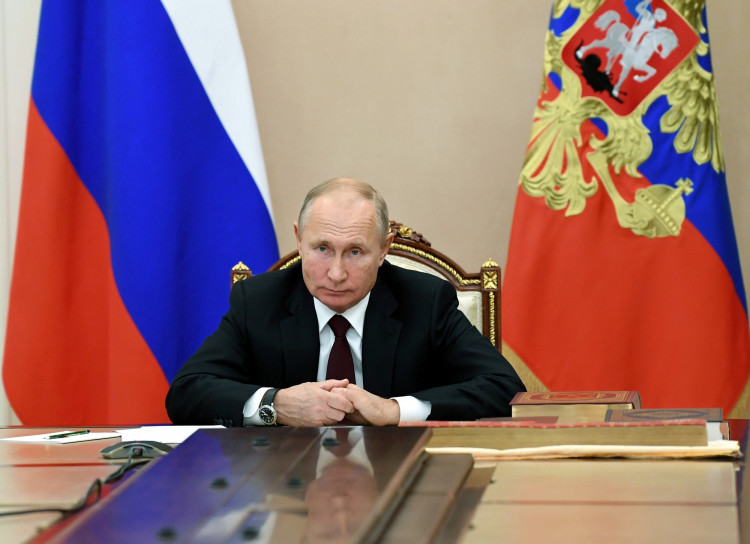
Russia has signaled that it intends to respond with increased military pressure. Russian Foreign Minister Sergei Lavrov said Moscow would continue conducting large-scale strikes against targets linked to Ukraine's military capabilities.
"It is no coincidence that the president announced some time ago, after yet another Kyiv terrorist attack, that we will now conduct massive group strikes on a regular basis against targets whose condition directly affects the combat readiness of the Ukrainian Armed Forces," Lavrov said.
The growing frequency of Ukrainian attacks also reflects changes in the balance between offensive and defensive capabilities. A recent CBS News report indicated Russia is facing shortages of S-300 interceptor missiles, a key component of the country's air-defense network. The Soviet-designed system has long served as one of the pillars of Russia's layered defense architecture.