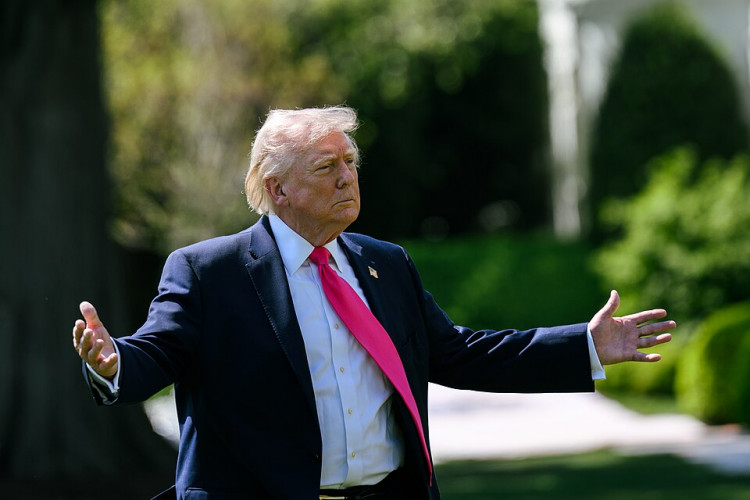
President Donald Trump privately pushed aides to respond to media coverage of his swollen ankles and considered having the issue addressed from the White House briefing room, according to a new book that examines concerns about the president's health during his second term.
In Regime Change: Inside the Imperial Presidency of Donald Trump, New York Times reporters Maggie Haberman and Jonathan Swan describe a series of episodes involving Trump's physical condition, appearance and daily routines. The book arrives as questions about the health of aging political leaders continue to draw attention in Washington.
According to the authors, Trump became frustrated after news reports highlighted swelling in his ankles, a condition his doctors have attributed to chronic venous insufficiency. Haberman and Swan write that the president wanted White House Press Secretary Karoline Leavitt to publicly address the matter during a press briefing.
The book says some aides viewed the idea as unusual, while others considered it consistent with Trump's long-standing sensitivity to public perceptions of his appearance. The authors do not indicate that such a briefing ever occurred, and no public record shows the issue being formally discussed from the White House podium.
Beyond the ankle controversy, the book portrays a president increasingly focused on managing signs of aging. Haberman and Swan report that longtime aide and valet Walt Nauta regularly traveled with grooming supplies, including makeup, hairspray, scissors and a clothes steamer. The authors also write that makeup was sometimes used to conceal bruising on Trump's hands before public appearances.
The book argues that physical changes became more noticeable to those around him. "Despite personally dominating any room," Haberman and Swan write, "his body could no longer fully conceal his age."
Among the incidents described are alleged hearing difficulties, with Trump reportedly asking people to repeat questions during meetings. The authors suggest that some press events were held in smaller settings, including the Oval Office, where acoustics were more favorable and standing for extended periods could be avoided.
The publication also revisits public episodes that have fueled speculation about Trump's health, including reports of dozing during meetings, visible bruising on his hands and occasional swelling. Haberman and Swan note that aides increasingly observed "moments of fatigue," while adding that "whatever thin verbal filter he had in the past was gone."
The White House strongly rejected the portrayal. Responding to the book, spokesperson Davis Ingle defended the president's condition and performance in office.
"President Trump's sharpness, unmatched energy, and historic accessibility stand in stark contrast to what we saw during the last administration when Democrats and the legacy media intentionally covered up Joe Biden's serious mental and physical decline from the American people," Ingle said.
He added that Trump "is the sharpest and most accessible President in American history who is working nonstop to solve problems and deliver on his promises."