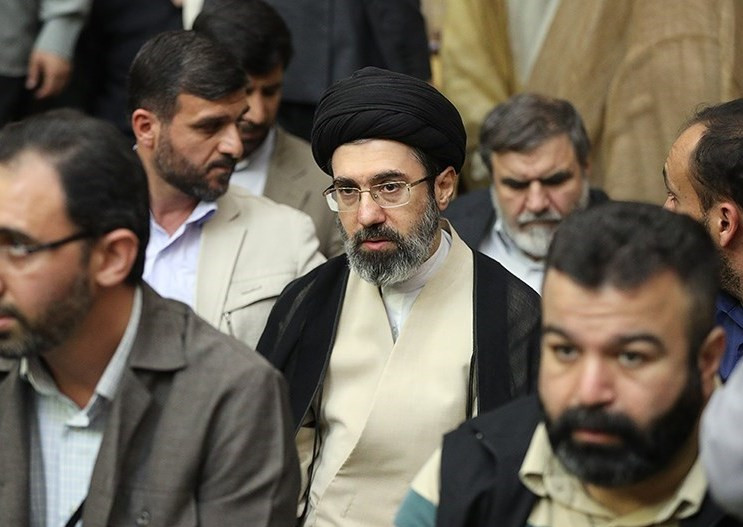
Iran's new Supreme Leader, Mojtaba Khamenei, has yet to make a public appearance since the state funeral for his father, Ali Khamenei, began on July 4, adding to uncertainty over the country's leadership transition as millions of mourners gather across Iran and officials cite security concerns for his continued absence.
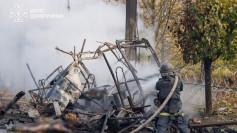
The funeral ceremonies, stretching over six days across Tehran, Qom and Mashhad, have become one of the largest public commemorations in the Islamic Republic's history following the death of Ali Khamenei in a joint U.S.-Israeli strike on his Tehran residence on Feb. 28. While state television has repeatedly broadcast images of senior officials, military commanders and members of the Khamenei family participating in the events, Mojtaba has remained out of public view.
His absence was particularly notable during the main funeral procession through Tehran on Monday, where three of Ali Khamenei's sons-Mostafa, Meysam and Masoud-were shown praying beside the family's coffins. Mojtaba did not appear alongside them, nor has he delivered a public speech or recorded message since assuming the country's highest office in March.
According to reports, Iranian security officials have discouraged Mojtaba from attending the remaining funeral ceremonies because they believe he could become a target for another Israeli attack.
Officials have reportedly rejected his request to attend the final burial in Mashhad, citing continuing security threats. Reports have also stated that Mojtaba suffered facial and leg injuries during the Feb. 28 strike that killed his father and several other family members, although Iranian authorities have not publicly detailed his medical condition.
His prolonged absence has intensified scrutiny of a succession process that generated controversy from the outset.
The Assembly of Experts selected Mojtaba as Supreme Leader following Ali Khamenei's death, but reports indicate that several members declined to participate in the vote, arguing that elevating the son of the previous supreme leader risked creating a hereditary system inconsistent with the principles established after Iran's 1979 Islamic Revolution.
Religious qualifications have also become part of the debate.
Mojtaba holds the clerical rank of hojjatoleslam, which is below the rank of ayatollah traditionally associated with senior religious leadership in Iran. Critics have questioned whether that standing provides sufficient theological authority for the country's most powerful religious and political office.
The debate carries additional symbolism because Ali Khamenei himself had previously criticized hereditary succession and publicly warned against family members using his position for personal influence. According to past statements, he also prohibited his sons from engaging in commercial activities tied to his status, saying he would sever ties with them if they exploited the family's political standing.
Analysts say Mojtaba's political influence has historically rested less on religious scholarship than on his relationships within Iran's security establishment.
The Stimson Center has assessed that Mojtaba spent years cultivating ties with the Islamic Revolutionary Guard Corps (IRGC), the Basij paramilitary force and intelligence officials rather than building a public profile as a senior cleric or elected official. Those relationships, analysts argue, helped secure institutional backing during one of the most volatile leadership transitions in the Islamic Republic's history.
That foundation differs significantly from the one established by Ali Khamenei during more than three decades as supreme leader.
Unlike his father, Mojtaba has never held elected office, rarely appears in public and has maintained a limited public profile throughout his political career. His continued absence has therefore left unanswered questions not only about his health but also about how he intends to exercise authority over Iran's political, military and religious institutions.
Before disappearing from public view, Mojtaba issued a statement on June 4 warning against efforts to divide the country from within. While the message focused on external adversaries, analysts have interpreted it as an indication that Iran's leadership remains concerned about internal rivalries emerging after the wartime succession.
The funeral has also highlighted Iran's diplomatic position following months of regional conflict.
Representatives from more than 100 countries have attended various stages of the ceremonies, according to Iranian officials, although few major world leaders have participated personally. The turnout has underscored both the scale of the event inside Iran and the country's continuing international isolation following months of conflict with the United States and Israel.