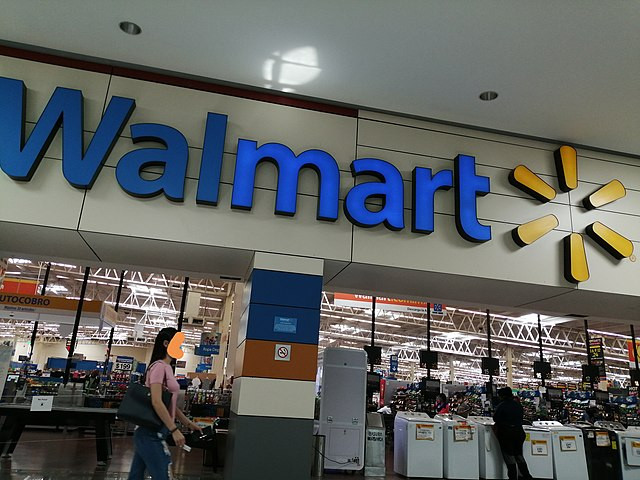
President Donald Trump on Monday credited his administration with Walmart's latest wave of price reductions, saying the nation's largest retailer lowered prices "at my Administration's request" to celebrate America's 250th anniversary. But the timeline of Walmart's annual summer promotion suggests the discounts had already been rolled out before the president made the claim, renewing debate over how much influence the White House has over private-sector pricing.
In a post on Truth Social, Trump praised Walmart as "one of the biggest, best, and smartest Retailers in America" and argued that the retailer's discounts reflected his administration's efforts to reduce costs for consumers. He also pointed to lower energy prices and prescription drug costs while urging other major retailers to follow Walmart's lead.
"This is a huge deal for the many millions of Americans who, smartly, shop at Walmart, which is a truly patriotic Company who loves the U.S.A. My Administration is lowering prices that Joe Biden incompetently raised with the worst inflation crisis in history," Trump wrote.
The comments came as Walmart continues its annual summer savings campaign, a recurring promotion that typically features discounts on seasonal groceries, outdoor products, apparel and household essentials. According to CNN, many of this year's discounts were already available roughly a week before Trump's Truth Social post, indicating the promotion had been planned independently of the president's announcement.
Among the discounted products currently advertised by Walmart are a range of seasonal grocery staples and consumer goods, including:
- Fresh 2.25-pound bags of red cherries priced at $5.63, down from $11.18.
- Approximately 12% off 73% lean ground beef, priced at $5.94 per pound.
- Corn on the cob discounted by roughly 50%.
- Pepsi and Coca-Cola 24-packs selling for $9.97.
- A 200-count package of disposable paper plates reduced by $1.
Warehouse retailer Sam's Club, which is owned by Walmart, is also promoting discounts on approximately 250 items as part of its seasonal sales campaign.
Seasonal markdowns have long been a feature of Walmart's merchandising strategy, particularly during the summer months when fresh produce reaches peak availability. Retail analysts note that products such as cherries, corn and other seasonal fruits and vegetables typically experience lower wholesale prices during harvest periods, allowing retailers to pass savings on to consumers.
The latest dispute also echoes a similar episode last year. In 2025, Trump highlighted Walmart's lower-priced Thanksgiving meal basket as evidence of improving affordability during his administration. Retail observers, however, noted at the time that the basket contained fewer items than the previous year's offering, complicating direct price comparisons.
The discussion comes as inflation remains a central political and economic issue heading into the second half of 2026. Grocery prices have increased approximately 2.7% over the past year, remaining below the broader inflation rate of 4.2%, although food inflation has accelerated compared with 2024. Retailers have increasingly relied on promotional pricing to attract cost-conscious shoppers while navigating persistent supply-chain and input-cost pressures.
Financial markets continue to monitor inflation trends closely. According to StoneX, nine of the 18 members of the Federal Open Market Committee now support higher interest rates, while markets are pricing in a 63% probability that the Federal Reserve will raise rates by September.
Michael Boutros, an analyst at Forex.com, told StoneX that the Federal Reserve's revised inflation forecast signals officials believe price pressures extend beyond temporary geopolitical disruptions.
"The Fed sees the inflationary problem here as much more deeply entrenched and well beyond just the inflationary shock we got because of the oil price surge and the Iranian war," Boutros said. "The Fed is doing it from a little bit stronger of a position in that the growth and employment seems pretty stable."
Boutros added that the central bank's revised projection "raises the floor for US dollar strength," suggesting policymakers remain concerned that inflation will prove more persistent than previously expected.