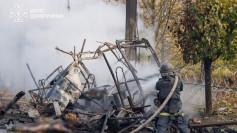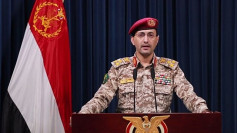
Ukraine said it struck Russia's largest oil refinery in Siberia, extending its long-range drone campaign more than 1,500 miles into Russian territory as President Volodymyr Zelensky warned that even deeper attacks are planned. The strike on the Omsk refinery, one of Russia's most important energy facilities, comes as Kyiv intensifies efforts to target infrastructure it says helps finance Moscow's war while signaling that the reach of its domestically produced drones continues to expand.
Ukraine's General Staff said the attack ignited a fire at the refinery in Omsk, a city near the Kazakhstan border and one of the deepest locations inside Russia that Ukrainian forces have claimed to strike since the war began. According to CNBC, the facility has the capacity to refine more than 21 million metric tons of crude oil annually, making it Russia's largest refinery.
The reported strike marks another step in Kyiv's strategy of targeting Russia's energy sector, which Ukrainian officials argue is a legitimate military objective because oil revenues help fund Moscow's military operations. In recent months, Ukraine has increasingly shifted long-range drone attacks toward refineries, fuel depots and export terminals rather than concentrating solely on military installations.
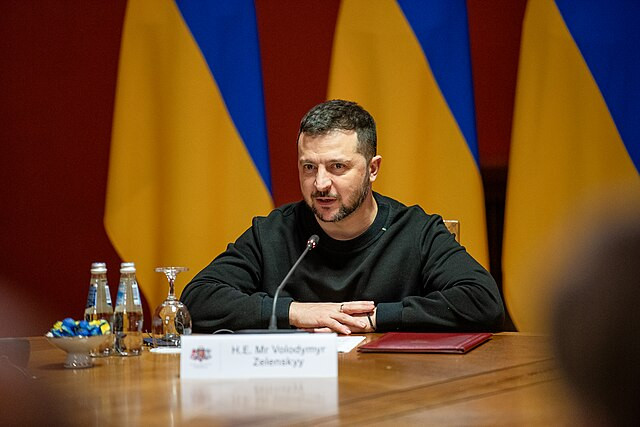
In his nightly address, Zelensky highlighted what he described as the expanding capabilities of Ukraine's drone program.
"Upgraded Fire Point drones have put Siberia within reach of Ukrainian precision. This is a significant blow to Russia's oil economy and an important achievement for the Armed Forces of Ukraine," Zelensky said.
The Ukrainian president also used an interview with the Financial Times to signal that additional strikes inside Russia could follow. Speaking about the expanding range of Ukrainian drones, Zelensky suggested Moscow itself would increasingly come within reach.
"He will be advised to move somewhere beyond the Urals. That will be a moment that opens a new chapter on the path toward ending the war. The farther Putin is from Moscow, the closer the end of the war and peace will be," Zelensky said, referring to Russian President Vladimir Putin.
He added that Ukraine intends to continue increasing pressure on Russia's political and economic centers.
"It is constant, difficult, and daily work. We must all stay focused and energized. The heroes are those on the front line. And all of us, the entire state, must keep carrying shells to them. If we do, we will bring a just and strong peace for Ukraine. That is what victory means for us," Zelensky said.
The Omsk operation follows a series of recent Ukrainian attacks on Russia's energy infrastructure. Last weekend, Ukrainian forces reportedly struck the St. Petersburg Oil Terminal and facilities in the Leningrad region. Earlier operations targeted refineries and fuel installations in Yaroslavl, Tuapse and Krasnodar Krai, reflecting a sustained campaign aimed at disrupting Russia's fuel production and distribution network.
Russian officials have acknowledged that repeated attacks are affecting domestic fuel supplies. On June 28, Putin said fuel shortages had become a concern in certain regions, an admission that underscored the growing strain on one of Russia's most strategically important economic sectors as Ukraine continues to target refining capacity.
Military analysts have increasingly viewed the campaign as an effort to impose economic costs alongside battlefield pressure. By damaging refineries, storage facilities and export terminals, Kyiv hopes to complicate fuel logistics supporting Russia's armed forces while forcing Moscow to divert additional air defense assets deeper inside the country.